
TOWOT Liquid Solder Flux, 30ml No-Clean RMA Rosin Flux
4.2Editor score
No-clean formula leaves minimal residue
Includes precision dropper
Lead-free and safe for PCBs
Compare the top ten liquid flux options for soldering electronics and metals to find the best rosin, zinc, or acid formulas for your specific repair needs.
Finding the right liquid flux is essential for creating strong, reliable solder joints in electronics and metalwork. A quality flux removes oxides and promotes wetting without damaging components.
We evaluated ten highly rated liquid flux products based on their formulas, application methods, and compatibility with various materials like copper, silver, and PCBs.
Each selection highlights specific strengths for different tasks, from delicate circuit repair to heavy-duty metal fabrication, ensuring you choose the best tool for your project.
4.2Editor score

4.6Editor score

4.6Editor score
This table provides a quick side-by-side comparison of the key specifications and best use cases for each liquid flux product reviewed in this guide.



This RMA liquid flux stands out for its high purity and environmental friendly formulation. With a 4.6 rating, users praise its ability to create strong joints without corrosion.
We may earn a commission when you buy through this link, at no additional cost to you.
Its advanced formula works on Tin-Lead, Lead-free, Gold, Silver, and Copper alloys. The neutral pH ensures no corrosion after soldering, making it safe for delicate circuit boards.
While it is excellent, the 30ml volume might require frequent repurchasing for heavy users. However, the quality of the solder joints often justifies the investment.
Ideal for electronics repair and DIY projects, this flux is a reliable choice for those prioritizing safety and performance over bulk quantity.
The non-corrosive nature ensures that sensitive components are not damaged during the soldering process.
Whether working with copper or gold, this flux adapts well to different alloy types for consistent results.
We may earn a commission when you buy through this link, at no additional cost to you.
Designed for precious metals, this flux ensures clean, reliable joints for jewelry making. Its clear formula allows jewelers to see exactly where the solder flows.
We may earn a commission when you buy through this link, at no additional cost to you.
It is suitable for gold, silver, and platinum work. The 8 oz size is convenient for bench use, offering value for professionals who need consistent performance.
The main limitation is its specialization; it may not be the best general-purpose flux for electronics. However, for its intended use, it performs exceptionally well.
If you work with precious metals regularly, this flux is a top-tier choice that delivers professional results with minimal cleanup.
The transparent nature of the liquid ensures you can maintain visibility of the solder joint during fabrication.
An 8 oz bottle provides plenty of product for extensive jewelry repair or fabrication work without running out quickly.
We may earn a commission when you buy through this link, at no additional cost to you.
This all-purpose zinc flux is perfect for metal crafts and art projects. With a 4.7 rating, users appreciate its ease of use and cleanup.
We may earn a commission when you buy through this link, at no additional cost to you.
It cleans up easily with water, which simplifies the workflow after soldering. The 8 oz size ensures you have enough for multiple sessions.
Because it is a zinc flux, it should not be used on electronic components. It is strictly for artistic metalwork and similar applications.
For artists and hobbyists working with non-electronic metals, this flux offers a simple and effective solution for joining pieces.
Unlike corrosive industrial fluxes, this one can be washed away with water to keep your workspace clean.
The high rating reflects its reliability for stained glass and metal sculpture enthusiasts.
We may earn a commission when you buy through this link, at no additional cost to you.
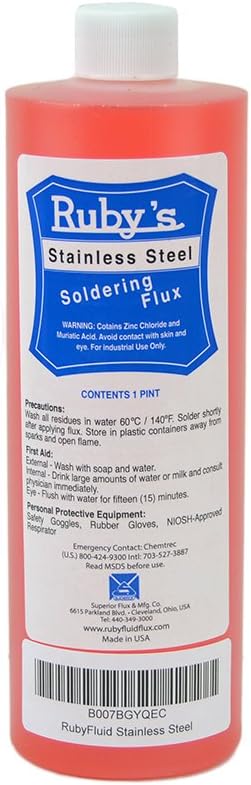
Formulated specifically for tough metals, this acid flux ensures high-strength connections in demanding environments. The 1-pint bottle is great for shop floors.
We may earn a commission when you buy through this link, at no additional cost to you.
It is designed for stainless steel, nickel, and brass where general fluxes fail. The rapid wetting ensures uniform flow for durable repairs.
Since it is an acid flux, it must be cleaned thoroughly to prevent corrosion. This makes it less suitable for sensitive electronics but ideal for metal fabrication.
Professionals in HVAC and metalworking will find this flux reliable for heavy-duty projects that require robust bonds.
This product is trusted by tradespeople for over a century due to its consistent results.
A pint value bottle is perfect for toolkits and heavy-duty projects in the workshop.
We may earn a commission when you buy through this link, at no additional cost to you.
This budget-friendly option uses a high-purity RMA formula to promote smooth solder flow. It leaves minimal residue, reducing cleaning time.
We may earn a commission when you buy through this link, at no additional cost to you.
The no-clean feature is a major plus for quick repairs on PCBs and circuit boards. It includes a precision dropper for easy application.
While the rating is slightly lower, it remains a cost-effective choice for hobbyists and DIYers on a tight budget.
For those looking for an affordable entry into liquid flux without sacrificing basic performance, this is a solid pick.
The no-clean nature allows you to finish projects faster without post-solder cleaning.
The precision dropper helps you apply just the right amount of flux to the joint.
We may earn a commission when you buy through this link, at no additional cost to you.
The squeeze bottle design makes application easy for those who prefer control over a dropper. It is non-corrosive and safe for storage.
We may earn a commission when you buy through this link, at no additional cost to you.
Users appreciate the safety features like high flash point and non-flammability. The residue is non-conductive, protecting your electronics.
While the volume is standard for electronics flux, the packaging makes it convenient for repeated use in a repair setting.
This flux is an excellent choice for those who value user-friendly packaging and safety alongside performance.
High flash point and non-flammability ensure safe storage and usage around workspaces.
Tapered tips allow precise application exactly where needed without mess.
We may earn a commission when you buy through this link, at no additional cost to you.
Designed for stained glass, this flux comes with a brush for easy application. It is water-soluble, simplifying cleanup significantly.
We may earn a commission when you buy through this link, at no additional cost to you.
Users praise the reliable bonds it forms on copper foil tape. The brush reduces mess and maximizes efficiency for art projects.
It is made in the USA, ensuring quality standards. However, it is specialized and not for general electronics repair.
Artisans will find this flux elevates their craftsmanship by providing a clean, dependable solution for soldering glass.
The included precision brush minimizes mess while maximizing efficiency in soldering.
Made in the USA, this flux meets high-quality standards for durability and reliability.
We may earn a commission when you buy through this link, at no additional cost to you.
This set offers the best value by including both flux and desoldering wick. It holds the highest rating of 4.8, proving its reliability.
We may earn a commission when you buy through this link, at no additional cost to you.
The flux is safe and non-corrosive, while the braid ensures fast heat transfer. It minimizes residue for a clean finish.
Ideal for repair kits, this combo saves money compared to buying separately. It is perfect for game console or smartphone repair.
For DIYers and professionals who need a complete toolkit, this pair is the strongest soldering partner available.
The combination of flux and wick makes everyday repair work faster and more convenient.
The thickened braid design ensures fast heat transfer and quick solder absorption.
We may earn a commission when you buy through this link, at no additional cost to you.
Kester is a trusted name in soldering, and this RMA flux is designed for rework on circuit boards. It leaves minimal residue.
We may earn a commission when you buy through this link, at no additional cost to you.
The low solids content ensures no interference with electrical testing. It specifically helps minimize solder bridges during rework.
While the bottle is smaller, the performance justifies the investment for precise work. It is widely used in professional repair settings.
If you need a high-performance flux for surface mount assemblies, this Kester option is a reliable choice.
Low solids content results in low residue left on the assembly after soldering.
It exhibits improved soldering performance to minimize solder bridges during rework operations.
We may earn a commission when you buy through this link, at no additional cost to you.
This flux is formulated with strong cleaning agents for fast and effective soldering operations. It is commonly used in HVAC applications.
We may earn a commission when you buy through this link, at no additional cost to you.
It ensures fast operation and can handle oxidized copper surfaces easily. The 4 oz size provides enough for various tasks.
While not for electronics, it is a robust choice for plumbing and metal joining tasks. It is a trusted brand for industrial work.
For HVAC professionals or metalworkers, this flux offers reliable performance for efficient soldering operations.
Formulated with strong cleaning agents to ensure fast and effective soldering operations.
Can be used for HVAC applications and handles oxidized copper with ease.
We may earn a commission when you buy through this link, at no additional cost to you.
Choosing the right flux depends on your specific materials and the type of work you perform.
Different projects require different flux chemistries. RMA Rosin flux is ideal for electronics as it is non-corrosive and leaves minimal residue. Acid or Zinc fluxes are better for metals like steel or brass but must be cleaned thoroughly to prevent corrosion.
Always check the label to ensure the formula matches your material.
Some fluxes are specialized for specific metals. Jewelry flux is designed for gold and silver, while industrial fluxes target stainless steel. Electronics flux is safe for copper and PCBs. Using the wrong type can damage components or create weak joints.
Match the flux to your primary working material to ensure reliability.
No-clean fluxes leave non-conductive residues that do not need washing, which saves time. However, industrial fluxes often require water or solvent cleanup. Consider whether you want a quick finish or can spend time cleaning after the job.
No-clean is preferred for electronics to avoid residue issues.
Flux comes in various sizes from small dropper bottles to large pints. Droppers offer precision for small electronics, while squeeze bottles allow better flow control. Larger bottles are cost-effective for heavy use but may expire if not used quickly.
Choose a size that matches your project frequency and storage capacity.
Safety is paramount. Look for non-toxic, lead-free, and halogen-free options especially in indoor spaces. Some acid fluxes have high flash points for safety, while others may emit fumes. Always work in a well-ventilated area.
Prioritize safety certifications like RoHS compliance for electronic work.
Established brands like Kester or Oatey often deliver consistent results compared to generic options. Trusted manufacturers adhere to quality standards that ensure the flux performs as advertised without unexpected issues.
Stick with reputable brands when working on valuable electronics or critical repairs.
Fluxes vary in their boiling points and reaction to heat. High boiling formulations resist oxidation better during reflow processes. Ensure the flux can handle the temperatures required by your solder without degrading.
Check specifications for thermal stability if using reflow soldering.
Cost varies significantly based on volume and specialized formulas. Budget options may work fine for hobbyists, while professionals may prefer high-end fluxes. Calculate the cost per ounce to compare value across different bottle sizes.
Balance your budget with the quality required for your specific application.
Prepare your surfaces by cleaning them with alcohol to remove any grease or oxidation. Apply a small amount of flux to the joint using the provided dropper or brush.
Heat the joint with your soldering iron and apply solder. The flux will flow into the joint and help the solder wet the surfaces effectively for a strong bond.
After soldering, allow the joint to cool completely. For no-clean fluxes, you can leave the residue, but for others, clean with water or solvent to prevent long-term corrosion.
RMA flux stands for Rosin Mildly Activated and typically leaves a small amount of non-corrosive residue. NC or No-Clean flux is formulated to leave minimal non-conductive residue that does not require cleaning after soldering.
Standard electronics flux is generally safe for copper but may not be strong enough for metals like steel or brass. Use specialized fluxes for metals to ensure a reliable bond and proper wetting.
Most liquid fluxes have a shelf life of about two years if stored properly. Keep the bottle sealed tightly and store it in a cool place to prevent drying or evaporation.
No, acid flux is highly corrosive and should never be used on electronic components. It will cause long-term damage to circuits. Use rosin or no-clean fluxes for electronics.
If solder is not sticking, the surfaces may be too dirty or the flux may have lost its potency. Clean the metal thoroughly and try fresh flux to ensure a proper bond.
Both methods work well. Droppers offer precision for small areas while brushes are better for larger joints or multiple connections. Choose the tool that fits your workflow.
It depends on the flux type. No-clean fluxes do not require cleaning, but other types should be cleaned to prevent corrosion or interference with electrical testing.
For jewelry, use a flux specifically designed for precious metals like gold and silver. These fluxes are formulated to create clean joints without damaging the fine materials.
We reviewed ten top-rated liquid flux options suitable for electronics, jewelry, and metal fabrication. Each product offers unique strengths depending on your specific repair or crafting needs.
Prioritize compatibility and safety when selecting a flux. Ensure the formula matches your materials and meets your standards for residue and cleanup to achieve reliable solder joints.
Check current availability and pricing to find the best deal for your project. The right flux makes a significant difference in the quality and longevity of your soldering work.