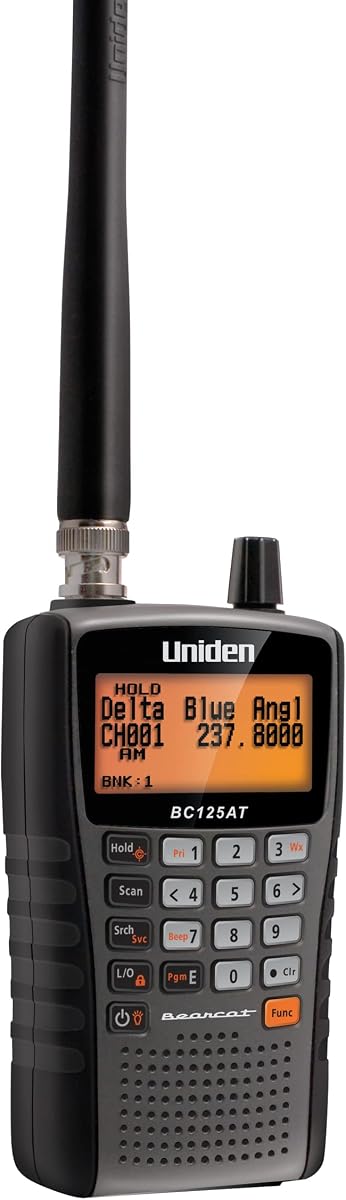
Uniden Bearcat BC125AT
4.0Editor score
500 Alpha-Tagged Channels
Close Call RF Capture
Lightweight Portable Design
Monitoring radio frequencies requires reliable hardware capable of capturing diverse signals across multiple bands. A good handheld scanner offers portability, clear audio, and the ability to decode various transmission types efficiently for users on the go.
We evaluated ten distinct models ranging from basic analog receivers to advanced digital trunking systems and spectrum analyzers. Each product was assessed based on channel capacity, decoding capabilities, build quality, and user interface design to ensure comprehensive coverage.
Each pick highlights specific strengths and ideal use cases to help you match a device to your monitoring goals. Prices and availability can fluctuate regularly so always check current listings before making your final purchase decision today.
4.0Editor score

4.4Editor score

4.5Editor score
As an Amazon Associate we earn from qualifying purchases.
The following table provides a side-by-side comparison of all ten selected devices highlighting their core specifications and unique capabilities for monitoring frequencies effectively in various environments.


The Uniden Bearcat BC125AT offers a solid starting point for hobbyists interested in analog radio monitoring with reliable performance and essential features in a compact form factor.
We may earn a commission when you buy through this link, at no additional cost to you.
Its 500 alpha-tagged channels allow you to organize frequencies by location or department making navigation intuitive. The Close Call RF capture technology helps you detect nearby transmitters quickly without manual searching.
However this unit does not support digital systems like Project 25 or DMR which limits its use in areas that have upgraded public safety communications. The battery compartment design is straightforward but requires frequent replacements during long sessions.
If you are looking for an affordable device to monitor local police fire or amateur radio bands this model delivers excellent value and ease of use for beginners and casual listeners.
The ten storage banks let you sort frequencies logically so finding specific transmissions takes seconds rather than minutes during active scanning sessions.
Close Call technology scans nearby frequencies instantly giving you real-time awareness of active signals in your immediate vicinity without complex programming.
We may earn a commission when you buy through this link, at no additional cost to you.
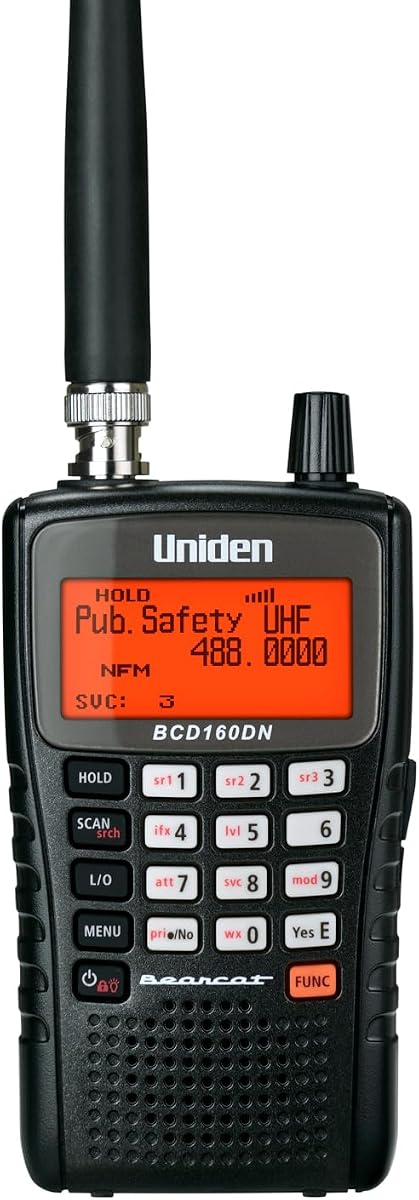
The Uniden Bearcat BCD160DN expands on the analog foundation by adding support for DMR and NXDN digital modes making it suitable for users who need to decode specific digital signals.
We may earn a commission when you buy through this link, at no additional cost to you.
Features like Narrow-Band Reception and rapid search capabilities allow for quicker signal detection in crowded RF environments. The unit includes rechargeable batteries and a USB cable for convenient power management during outdoor use.
However the lack of trunking support means it cannot track complex public safety systems that switch channels automatically. Some users have noted inconsistent performance ratings which suggests variability in reliability compared to higher-end models.
This scanner serves well for those needing digital decoding on a budget but may require an upgrade if you operate in regions with advanced trunked radio systems or high interference levels.
Instant DCS and CTCSS tone decode helps you identify system settings quickly without needing external software or manual frequency adjustments.
The USB charging capability allows you to power the device directly from a laptop or power bank ensuring you stay monitoring for longer periods.
We may earn a commission when you buy through this link, at no additional cost to you.
The Uniden Bearcat SR30C brings analog simplicity to a smaller package with features like Turbo Search and PC programming that enhance usability without adding unnecessary complexity.
We may earn a commission when you buy through this link, at no additional cost to you.
With 500 channels and pre-set service banks for Marine Aviation and other bands it provides instant access to popular frequencies. The triple-conversion design ensures clear audio performance even in areas with moderate interference.
Memory backup keeps your saved channels safe during power loss while the earphone jack allows for private listening without disturbing others. However it lacks digital trunking capabilities which restricts it to analog environments.
Ideal for casual users who prioritize portability and straightforward operation this scanner is perfect for events or travel where analog signals are dominant and advanced digital features are not required.
Managing frequencies via a computer interface streamlines the setup process allowing you to import and organize large channel lists efficiently.
Support for USB power or standard AA batteries gives you multiple options to keep the device running in various scenarios away from home.
We may earn a commission when you buy through this link, at no additional cost to you.
The Uniden SDS100 stands out with its True I/Q receiver technology which delivers exceptional performance in weak-signal and simulcast environments making it a top choice for serious enthusiasts.
We may earn a commission when you buy through this link, at no additional cost to you.
Location-based scanning uses GPS coordinates or zip codes to automatically select nearby systems saving time and effort. The HomePatrol database covers known systems across the US and Canada with weekly updates ensuring current coverage.
The rugged weather-resistant construction protects against harsh conditions while the customizable color display lets you prioritize information that matters most. While powerful the learning curve and cost may be barriers for casual users.
If you need a reliable scanner for public safety monitoring in challenging RF areas this model offers the performance and features necessary to maintain consistent clear audio reception wherever you go.
Capturing the complete signal waveform in three dimensions allows for better error correction and recovery compared to traditional receiver architectures.
GPS connectivity ensures the scanner adapts to your moving location automatically selecting the right systems without manual reprogramming during travel.
We may earn a commission when you buy through this link, at no additional cost to you.
The Whistler WS1040 introduces free form memory organization which eliminates rigid banks and allows for dynamic allocation of storage based on your specific needs and preferences.
We may earn a commission when you buy through this link, at no additional cost to you.
Its support for P25 Phase I trunking systems ensures compatibility with many public safety networks while the Skywarn function provides instant access to storm spotter frequencies for weather enthusiasts.
Menu driven programming with context sensitive help text makes setup more intuitive than older models. However users may encounter minor issues with USB detection or need to adjust digital AGC for optimal audio levels.
This scanner is well suited for those who want customizable storage options and weather alerts in a single device without breaking the bank for a high-end trunking solution.
Dynamic memory allocation lets you use space more efficiently by storing channels where they fit best without wasting rigid bank slots.
Built-in SAME weather alerts ensure you never miss severe weather updates by programming the scanner to scan local forecast frequencies automatically.
We may earn a commission when you buy through this link, at no additional cost to you.
The Uniden BCD436HP simplifies trunking with HomePatrol ease of use requiring no programming beyond entering your zip code for instant access to nearby systems.
We may earn a commission when you buy through this link, at no additional cost to you.
Instant replay plays back the last four minutes of transmissions which is invaluable for catching missed communications. The extra-large display and custom alert options ensure you stay informed with minimal interaction.
While it is a premium investment the user-friendly interface makes advanced digital monitoring accessible to those who dislike complex setup menus. The combination of weather alerts and GPS connectivity adds further value.
If you prioritize simplicity and want immediate access to trunked systems without spending hours on configuration this scanner offers a streamlined and highly effective solution for active monitoring.
Entering your zip code automatically configures the scanner for local systems removing the need for manual frequency entry or external software.
Instant replay allows you to review recent transmissions ensuring you never miss critical information due to a brief distraction.
We may earn a commission when you buy through this link, at no additional cost to you.
The SeeSii TinySA Ultra+ transforms handheld monitoring with spectrum analysis capabilities covering a range up to 5.4GHz making it a powerful tool for deep RF diagnostics.
We may earn a commission when you buy through this link, at no additional cost to you.
Its 4.0 inch touchscreen provides a clear view of signal density and strength while the built-in signal generator allows for testing and verification workflows in one device.
ESD protection and a long-lasting 5000mAh battery ensure reliability during extended field use. However this device is specialized for technical analysis rather than simple audio listening which requires a different skillset.
For engineers and enthusiasts who need to visualize signals rather than just listen to them this analyzer offers professional-grade features in a portable and affordable package.
Spectrum visualization helps identify interference and overlapping signals that audio-only scanners might miss or confuse during active monitoring.
The signal generator function supports self-testing and calibration tasks ensuring accurate readings without needing external hardware or lab tools.
We may earn a commission when you buy through this link, at no additional cost to you.
The AURSINC TinySA Ultra+ ZS407 extends the frequency range to 7.3GHz allowing for analysis of higher frequency signals often used in modern communication technologies.
We may earn a commission when you buy through this link, at no additional cost to you.
Its built-in LNA provides extra gain up to 7.3GHz which improves weak signal reception significantly. The low phase noise ensures precise analysis of signal stability and spectral purity.
With a 4-inch IPS display you can visualize detailed RF data clearly. While the technical features are robust the device requires a good understanding of spectrum analysis to use effectively.
This model is ideal for professionals who need to test high-frequency components or troubleshoot complex RF systems with precise measurement capabilities in the field.
The integrated LNA boosts signal levels for weak inputs making it easier to detect low-power transmissions in noisy environments.
Low phase noise performance allows for accurate tracking of signal stability over time which is critical for detailed spectrum analysis work.
We may earn a commission when you buy through this link, at no additional cost to you.
The Portable Tinysa Spectrum Analyzer offers an accessible entry point into RF analysis with essential features and ESD protection at an affordable price point.
We may earn a commission when you buy through this link, at no additional cost to you.
Its 2.8 inch touchscreen provides basic visualization of signals while PC control lets you manage settings and capture data from a computer for deeper inspection.
With a max frequency of 960MHz it handles standard VHF and UHF bands effectively. While not as advanced as higher GHz models it suffices for many amateur radio and basic interference detection tasks.
This device is perfect for students or hobbyists who want to learn spectrum analysis principles without investing in expensive professional equipment immediately.
Serial over USB support allows you to integrate the device into automated measurement scripts or use PC software for detailed data analysis.
Lower cost makes this analyzer accessible to more users who want to experiment with RF concepts before committing to larger investment options.
We may earn a commission when you buy through this link, at no additional cost to you.
The AURSINC TinySA Ultra+ ZS406 balances advanced features with usability offering adjustable resolution bandwidth for fast and accurate measurements across wide frequency ranges.
We may earn a commission when you buy through this link, at no additional cost to you.
It supports data storage on the included SD card and connects easily to PCs for remote control. The phase noise performance ensures clean data even when analyzing weak signals in crowded spectrum environments.
Battery life is solid allowing for hours of continuous operation which is essential for fieldwork. While not a traditional audio scanner it provides deep insight into signal structure and quality.
For users needing a dependable tool to visualize and analyze RF signals this model offers a powerful combination of features and portability suitable for both learning and professional tasks.
Switchable bandwidth filters allow you to trade speed for precision depending on the task at hand during your analysis session.
Built-in storage lets you save and transfer measurement data easily enabling you to review results later or share them with colleagues.
We may earn a commission when you buy through this link, at no additional cost to you.
Selecting the right scanner depends on your specific monitoring goals whether it is listening to public safety broadcasts or analyzing RF signals.
Modern public safety agencies increasingly use digital systems like Project 25 or DMR which require a digital scanner to decode audio. Analog scanners are cheaper but may become obsolete in areas that have switched to digital communication protocols.
Ensure your choice supports the necessary digital modes for your region if you want to listen to police or fire channels effectively.
Trunking systems automatically switch frequencies based on activity meaning a standard scanner might miss parts of a conversation. A trunking scanner tracks these switches so you hear complete communications without interruption.
Look for models with TrunkTracker V or similar engines if you need to monitor busy public safety networks in large cities.
Different scanners cover different frequency bands from VHF to UHF and even higher for specialized analysis. Check the device specifications to ensure it covers the bands you are interested in monitoring.
Spectrum analyzers offer broader ranges than standard scanners so choose based on whether you need audio listening or signal visualization.
High channel capacity allows you to store more favorite frequencies without deleting old ones. Memory organization features like banks or favorites lists help you manage large sets of channels efficiently.
A flexible memory system saves time when switching between different areas or events during your monitoring activities.
Since handheld scanners are meant for on-the-go use they should be lightweight with accessible battery options. Rechargeable batteries or standard AA cells offer flexibility depending on your power availability.
Check battery life ratings if you plan long outdoor sessions to ensure you stay powered throughout your monitoring sessions.
Programming can be complex on advanced models so consider units with PC software or simplified zip-code setup options. Intuitive menus reduce the time spent configuring the device before use.
Tools like HomePatrol or PC software help manage channels without manual entry of every frequency individually.
Durable materials and weather-resistant features are important if you plan to use the scanner outdoors or in harsh conditions. A rugged build protects internal components from dust moisture and accidental drops.
Look for devices with JIS ratings or reinforced cases if you need reliability in demanding environments.
Clear audio ensures you can distinguish between different voices or transmissions even in noisy environments. Alert features like custom tones or LED lights help you notice important signals without constant listening.
High-quality speakers and optional earphone jacks improve the listening experience for private monitoring.
To begin set up your device by inserting batteries and powering it on. Use the manual or PC software to load frequencies relevant to your area or interest.
Regularly update the firmware and channel database to ensure your scanner can access the latest frequencies and features provided by the manufacturer.
Store the scanner in a cool dry place away from direct sunlight to prolong battery life and prevent screen damage. Keep antennas clean and connected securely for optimal reception.
A scanner is designed to automatically tune into active frequencies across a range while a radio typically tunes to one fixed frequency. Scanners are ideal for listening to multiple channels like public safety without manual tuning.
Many modern police departments use digital systems so analog scanners may not decode their transmissions. A digital scanner ensures you can hear clear audio from agencies that have switched to digital protocols.
Many modern models support zip code setup or PC software that auto-fills local frequencies. Use these tools to avoid manual entry and save time during the initial configuration process.
Yes many handheld scanners have external antenna jacks to improve reception while driving. Some also include cigarette lighter adapters for continuous power use in the vehicle.
A spectrum analyzer visualizes signal strength across a frequency range helping identify interference or overlapping channels. It is useful for technical analysis rather than simple audio listening.
Use an external antenna and position the scanner higher up for better signal capture. Avoid metal surfaces and interference sources like routers when monitoring weak transmissions.
Many models include rechargeable batteries or standard AA cells but always check the product listing. Some may require you to purchase batteries separately to operate the device out of the box.
Close Call technology detects nearby transmitters and tunes to them automatically without manual scanning. This helps you find active signals in your immediate vicinity quickly.
We explored ten diverse devices from simple analog models to advanced spectrum analyzers that cater to different monitoring needs and technical requirements.
Focus on digital support and trunking if you need to track public safety communications reliably otherwise basic analog or analyzer options offer great value.
Prices and availability change regularly so verify current specs and deals before purchasing to ensure the device matches your expectations today.