
SVBONY SV172 Dew Heater
4.6Editor score
USB powered design
Compact 240mm width
Universal lens warmer
Dew formation can ruin a night of stargazing by fogging up your optics. A quality dew heater prevents moisture buildup on lenses and mirrors, ensuring clear views throughout your session.
We evaluated ten leading models based on heating efficiency, build quality, and ease of use. Our list covers USB and 12V options suitable for various telescope sizes and budgets.
Each pick highlights key strengths and ideal use cases for different astronomers. Prices and availability may vary, so check current listings before making your final decision.
4.6Editor score

4.7Editor score

5.0Editor score
As an Amazon Associate we earn from qualifying purchases.
The table below provides a side-by-side overview of each model. It includes key specifications and direct links to product details for easy comparison.


The SVBONY SV192 Dew Heater stands out as a top contender for serious observers. It received a high rating of 4.7 stars from users who appreciate its reliability. The 3-speed regulator allows precise adjustments to match varying weather conditions.
We may earn a commission when you buy through this link, at no additional cost to you.
Its construction uses SBR and Black-T three-layer heat preservation material to ensure consistent warmth without excess heat loss. This design helps maintain optimal lens temperatures even in cold or humid nights. The interface supports standard 12V power inputs for seamless integration.
While it excels in performance, the size is best suited for larger optics up to 152mm. Smaller users might find it bulky for compact setups. However, the effective fogging prevention makes this trade-off acceptable for most telescope owners.
This model is ideal for astronomers seeking a balance of performance and affordability. If you need a reliable heater for primary mirrors or camera lenses, this is a strong recommendation. It ensures your equipment stays dry during long observation sessions.
The 3-speed regulator lets you dial in the exact heat needed to prevent dew without overheating your optics.
Triple-layer insulation material reduces heat dissipation effectively, keeping energy use efficient and lenses protected.
We may earn a commission when you buy through this link, at no additional cost to you.
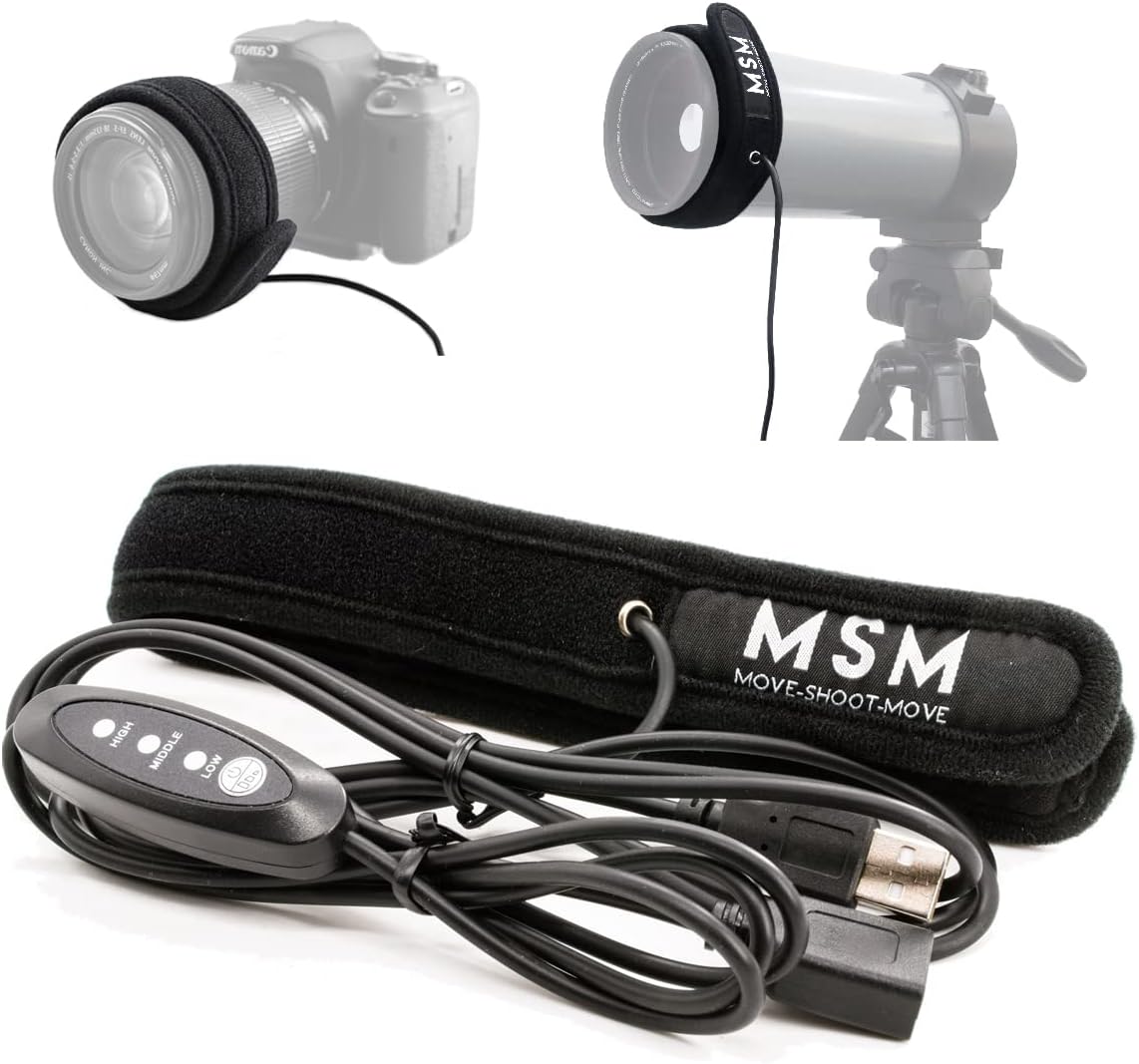
The SVBONY SV172 is an excellent budget option for users with smaller optics. It earned a solid 4.6-star rating for its versatility and ease of use. The USB port design allows connection to power banks or laptops for flexible outdoor operation.
We may earn a commission when you buy through this link, at no additional cost to you.
Its 50mm narrow width ensures it does not interfere with focusing or create dark corners in the field of view. The heating element warms quickly and evenly thanks to built-in aluminum and alloy fiber wires. This makes it effective for preventing fogging on camera lenses.
While it is great for small scopes, it only fits diameters below 76mm. Users with larger primary mirrors will need a different model. However, for portable setups or backup optics, its cost-effectiveness is hard to beat.
This heater is perfect for casual observers or those needing a secondary warmer. Its lightweight build means it adds minimal bulk to your gear. If you want an easy-to-use solution without breaking the bank, this is a top choice.
Connect to any standard USB source like a power bank to keep your lens warm without heavy batteries.
The slim width ensures the strap does not block viewfinders or interfere with fine focus adjustments.
We may earn a commission when you buy through this link, at no additional cost to you.
The R-Sky Astro Instruments Dew Heater Strip achieves a perfect 5.0 rating from verified users. It is designed for serious enthusiasts who want reliability in harsh conditions. The hand-assembled construction ensures every component is securely fitted for long-term use.
We may earn a commission when you buy through this link, at no additional cost to you.
Its special construction provides even heat distribution, preventing cold spots that could lead to condensation. The power cord remains flexible even at sub-zero temperatures, making it ideal for winter observing. Multiple sizes are available to match various telescope tube diameters.
While the price is higher than generic options, the build quality justifies the investment. It may be overkill for casual backyard stargazing but is excellent for astrophotography sessions. The consistent performance reduces the risk of equipment fogging mid-session.
This model is best suited for users with specific tube sizes like SCT or Maksutovs. If you demand top-tier durability and performance, this strip is the premium choice. It keeps your optics clear so you can focus entirely on the night sky.
The power cord stays soft and tangle-free even in freezing weather, ensuring reliable connection during cold nights.
Choose from multiple sizes to perfectly match your telescope tube for a secure and effective fit.
We may earn a commission when you buy through this link, at no additional cost to you.
The Lens Warmer Flexible is engineered for extreme cold conditions down to -25 degrees Celsius. It offers a robust solution for astrophotographers facing harsh winter nights. The neoprene material is soft and flexible, wrapping easily around lenses without hardening.
We may earn a commission when you buy through this link, at no additional cost to you.
Its USB port design allows for easy connection to portable power banks. The heating system reaches 167 degrees Fahrenheit quickly to ensure rapid dew prevention. A temperature regulator on the cable provides three incremental levels for user control.
While it is highly flexible, the maximum diameter is capped at 4.26 inches. Users with larger optics will need to check compatibility carefully. However, for lenses within this range, the performance in cold weather is commendable.
This heater is ideal for portable setups that need to withstand freezing temperatures. The adhesive strap makes it quick to attach and remove. If you often shoot in cold climates, this model offers the flexibility you need.
Tested down to -25C, the cable remains functional and flexible, preventing failure in freezing conditions.
The system warms fast and continuously to reach target temperatures efficiently for quick session starts.
We may earn a commission when you buy through this link, at no additional cost to you.
The Celestron 8in Ring is specifically designed for Schmidt-Cassegrain and EdgeHD models. It fits perfectly to prevent dew on the corrector lens which is crucial for imaging. The aluminum construction is rigid yet lightweight, adding minimal weight to the setup.
We may earn a commission when you buy through this link, at no additional cost to you.
Included cable management helps organize wires and reduce unnecessary weight on the telescope tube. The 2-year warranty and US-based support provide peace of mind for buyers. This dedicated accessory ensures optimal performance for Celestron users.
While excellent for 8 inch scopes, it is not universal. Users with other brands or sizes will need a different solution. However, the seamless integration and support make it a great choice for those owning this specific equipment.
This ring is best for owners of Celestron 8 inch telescopes. It simplifies dew management with a tailored design. If you value warranty support and perfect fit, this is a highly recommended accessory.
Tailored to wrap around the corrector lens specifically to stop condensation where it matters most.
A cable management clip helps keep wires tidy and prevents strain on the optical tube assembly.
We may earn a commission when you buy through this link, at no additional cost to you.
The NEEWER HW-23B offers a long 23.6-inch strip suitable for various lenses. It features three clear temperature settings to adapt to humidity levels. This model is versatile enough to work with DSLR cameras and binoculars in addition to telescopes.
We may earn a commission when you buy through this link, at no additional cost to you.
Its touch fastener design allows for secure wrapping without complex clips. The lightweight material ensures portability during travel shooting sessions. With a 1.5-meter USB cable, it provides ample flexibility for power source positioning.
While the rating is slightly lower, it remains a solid option for general users. The specific temperature range helps prevent overheating on sensitive optics. Users with smaller diameters might find the length excessive though.
This heater is ideal for photographers who need a long strap for multiple lenses. If you use a mix of equipment, this versatile strip covers many needs. It offers reliable warmth to keep your view clear in damp conditions.
Designed to fit telescope lenses and DSLR cameras alike with a wide range of circumference support.
The touch fasteners make it easy to adjust and secure the strap quickly in the field.
We may earn a commission when you buy through this link, at no additional cost to you.
The Astromania USB Strip is a compact solution for smaller telescope optics. It features a stepless regulator that allows smooth temperature adjustments without preset steps. This gives users precise control over the heat output for their specific environment.
We may earn a commission when you buy through this link, at no additional cost to you.
Its short 25cm length makes it easy to wrap around smaller lenses or eyepieces. The USB design simplifies power management since you can use standard power banks. It also serves as a warming band for water or feeding bottles.
While the rating is lower than premium options, it fulfills its function well. The price is very competitive for those on a tight budget. However, the short length limits it to specific smaller applications only.
This model is best for small refractors or spotting scopes. If you need an affordable and adjustable heater for minor dew issues, it works well. It keeps your optics clear with minimal investment required.
The stepless knob lets you fine-tune the heat exactly to match the humidity conditions without jumps.
Beyond telescopes, you can use this strip to warm bottles or protect gear from the cold.
We may earn a commission when you buy through this link, at no additional cost to you.
This set offers five bands of varying sizes to cover different scopes. It includes 4, 6, 15, 27, and 37-inch options to match your gear. The standard RCA connectors make it compatible with most 12V portable power sources.
We may earn a commission when you buy through this link, at no additional cost to you.
Each band features a reliable fastening mechanism for a secure fit during use. The set provides versatility for multiple devices in one purchase. This is useful if you own several different equipment sizes and want a unified solution.
While individual ratings vary, the variety is a major strength for collectors. The cost is higher but provides immediate coverage without extra purchases. Ensure your power supply matches the 12V requirement for best results.
This kit is best for observatories or users with multiple telescope tubes. It simplifies logistics by providing various sizes in one package. If you need a comprehensive solution for different equipment, this set is practical.
The variety of sizes ensures you have a matching band for any telescope tube or lens in your collection.
Standard RCA plugs allow easy connection to existing dew controllers and power hubs without adapters.
We may earn a commission when you buy through this link, at no additional cost to you.
The USB Lens Warmer is designed for extreme cold environments down to -40 degrees. It uses a low-temperature wire design to prevent freezing and breaking. This makes it a reliable choice for winter observing in harsh climates.
We may earn a commission when you buy through this link, at no additional cost to you.
Its adjustable regulator allows low, medium, and high modes for user preference. The 1.5m cable provides enough reach to connect to power sources easily. Installation is quick thanks to the simple adjustment mechanism for different lens sizes.
While it is affordable and durable, it is limited to smaller diameters. Users with larger optics will need to check dimensions carefully. However, for lenses under 80mm, it offers excellent protection against frost.
This model is best for cold region observers with standard DSLR lenses. If you face freezing temperatures regularly, the wire design ensures longevity. It keeps your gear operational when other units might fail in the cold.
Built to withstand -40C without freezing, ensuring continuous heat output during the coldest nights.
Simple adjustments allow you to wrap and secure the heater quickly before your observation session begins.
We may earn a commission when you buy through this link, at no additional cost to you.
This R-Sky model earns a perfect 5.0 rating for consistent performance on 6-inch scopes. It maintains a clear view by ensuring uniform heating across the surface. The 120cm power cord is flexible and soft even in freezing conditions.
We may earn a commission when you buy through this link, at no additional cost to you.
Hand-assembled by R-Sky to ensure high quality standards. The design focuses on reliability for long-term use. It fits perfectly with refractors and SCT designs of this size. This consistency prevents spots where dew might form unnoticed.
It is specific to 6-inch optics which is ideal if that is your primary size. Users with different dimensions will need to adjust expectations. The price reflects the high build quality and specific fit.
Best for owners of 6-inch telescopes who demand reliability. If your gear matches this size, this strip offers peace of mind. It provides a steady, even heat that keeps your optics ready for imaging.
The strip distributes heat evenly to prevent cold spots that lead to condensation on your lens.
Hand-assembled components ensure the heater performs reliably over many years of outdoor use.
We may earn a commission when you buy through this link, at no additional cost to you.
Selecting the right dew heater depends on your equipment size, power preferences, and budget. Understanding key factors ensures you pick a model that keeps your optics clear.
Match the heater strip length to your telescope's circumference. Measure your lens or tube to ensure a snug fit. Some units offer adjustable straps while others come in fixed sizes.
Always verify diameter limits before buying to avoid a heater that is too small or too long for your gear.
Decide between USB and 12V power based on your setup. USB units offer convenience for portable use with power banks. 12V models often deliver stronger heat for larger optics.
Check that your power source matches the heater's voltage requirements to prevent damage or inefficiency.
Look for models with variable temperature settings. A regulator allows you to adjust heat based on humidity levels. Fixed settings may be less efficient in varying conditions.
Precise control helps prevent overheating which could damage sensitive optical coatings.
Choose heaters with cables that remain flexible in cold weather. Stiff cords can be difficult to manage and may crack. Long cables provide better reach for positioning your power source.
A durable, soft cord ensures reliable connection even during winter observing sessions.
Inspect the materials used for the heating element and insulation. Neoprene and metal alloys offer better durability. Good insulation improves heat efficiency and safety.
Higher quality materials contribute to the long lifespan of your heater.
Check how the heater attaches to your lens. Velcro straps and adhesive options allow quick setup. Secure mechanisms prevent the heater from slipping during use.
Easy installation saves time and ensures the heater stays in place.
Consider brands with positive feedback from the astronomy community. Reputable brands often offer better support and warranty coverage. Read reviews to gauge long-term reliability.
A solid warranty gives you peace of mind for your investment in protection gear.
Wrap the heater strip around the lens or tube securely to ensure full contact. Secure the ends tightly using the provided fasteners to prevent movement during use.
Connect the power source before heading into the cold. Turn on the heater and set the temperature to a medium level to start warming gradually.
Inspect the cord and strip for wear after each session. Store the heater in a dry place away from direct sunlight to extend its lifespan.
Yes, dew heaters effectively prevent fogging by warming the lens slightly above the dew point. This stops moisture from condensing on the glass surface. Consistent use ensures clear views throughout your session.
USB is more portable and suitable for smaller lenses. 12V provides stronger power for larger optics and longer sessions. Your choice depends on whether you prioritize convenience or power output.
Most heaters warm up within a few minutes of being powered on. The exact time depends on ambient temperature and power input. Setting it up early ensures immediate effectiveness once you start observing.
Many models are designed specifically for camera lenses. Check the diameter compatibility to ensure a proper fit. These units are ideal for night photography to avoid condensation on the glass.
With proper care, a heater strip can last several years. Avoid sharp bends and store it correctly when not in use. The heating element is durable if handled gently.
A controller is optional but helpful for precise temperature management. Simple units with built-in regulators work well for basic needs. Controllers are better if you have multiple heaters to manage.
We have highlighted the top models that excel in performance and reliability. The SVBONY SV192 offers a great balance of control and price. The R-Sky strip is ideal for those seeking premium build quality.
Consider your specific equipment size and power needs when making a decision. A well-chosen heater will protect your investment and improve your viewing experience. Prioritize durability and ease of use for long-term satisfaction.
Always check current availability and pricing on the product pages. Prices and stock may change based on demand. Secure your gear early to ensure you are ready for the next clear night.