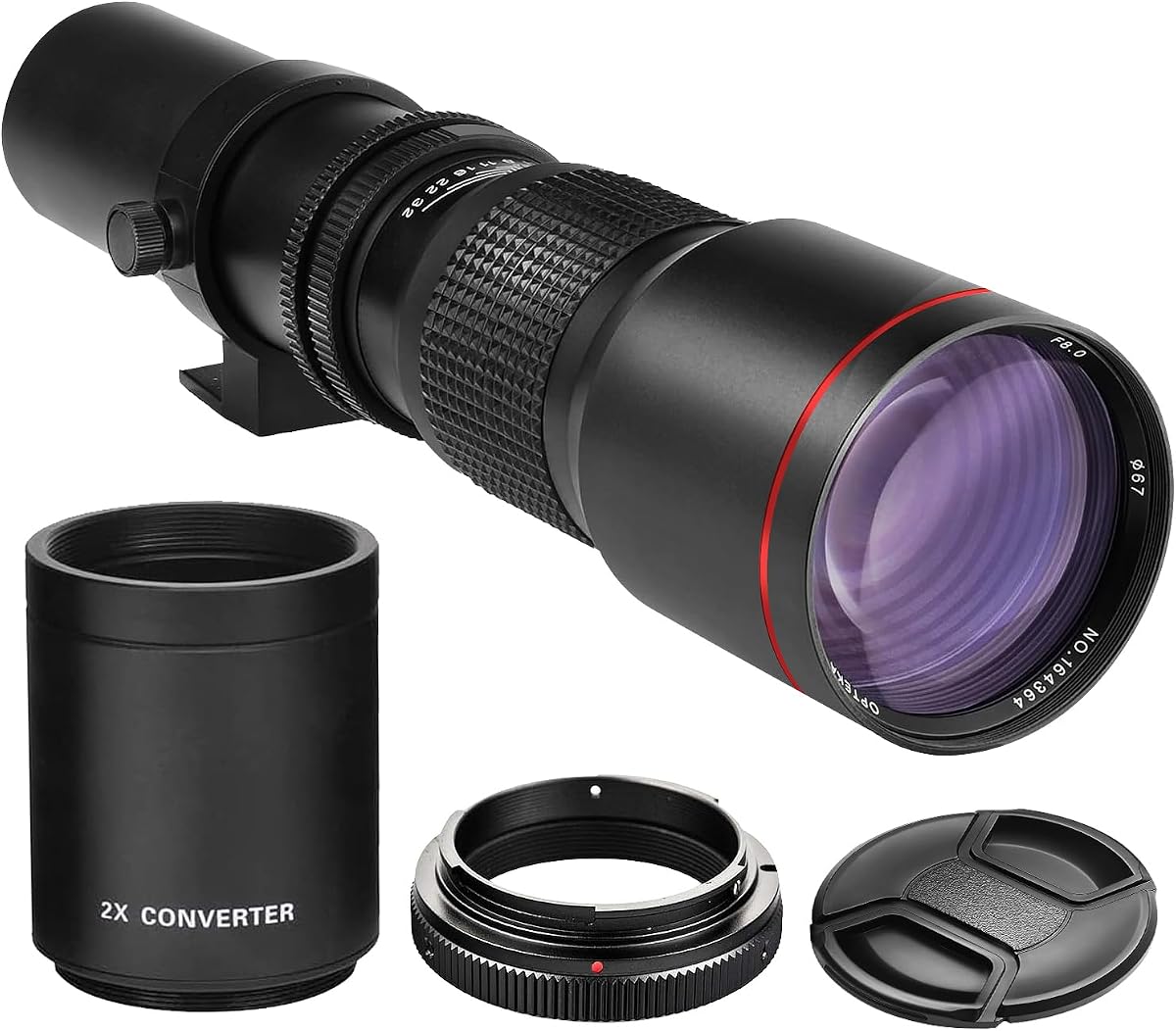
High-Power 500mm/1000mm f/8 Manual Telephoto Lens
4.0Editor score
High power telephoto lens for DSLR cameras
2X teleconverter doubles power to 1000mm
Durable construction built for outdoor shooting
This guide compares the top camera lens for long distance wildlife to help you capture sharp images of birds and animals from afar with expert insights.
Capturing wildlife from a distance requires specialized optics that balance reach and clarity. A good lens must offer sufficient focal length to isolate subjects while maintaining sharpness. Image stabilization is critical for handheld shooting in unpredictable outdoor environments where tripods may not be feasible.
We evaluated ten top-rated telephoto lenses based on optical performance, autofocus speed, and build quality. Our comparison includes options for both Canon and Nikon systems to cover a wide range of camera users. Each product was analyzed for its suitability in capturing moving animals without disturbing their natural behavior.
Every pick includes detailed specifications and real-world performance notes to guide your purchase. Note that availability and pricing can vary based on retailer stock and seasonal promotions. Always verify compatibility with your specific camera body before ordering to ensure seamless integration.
4.0Editor score
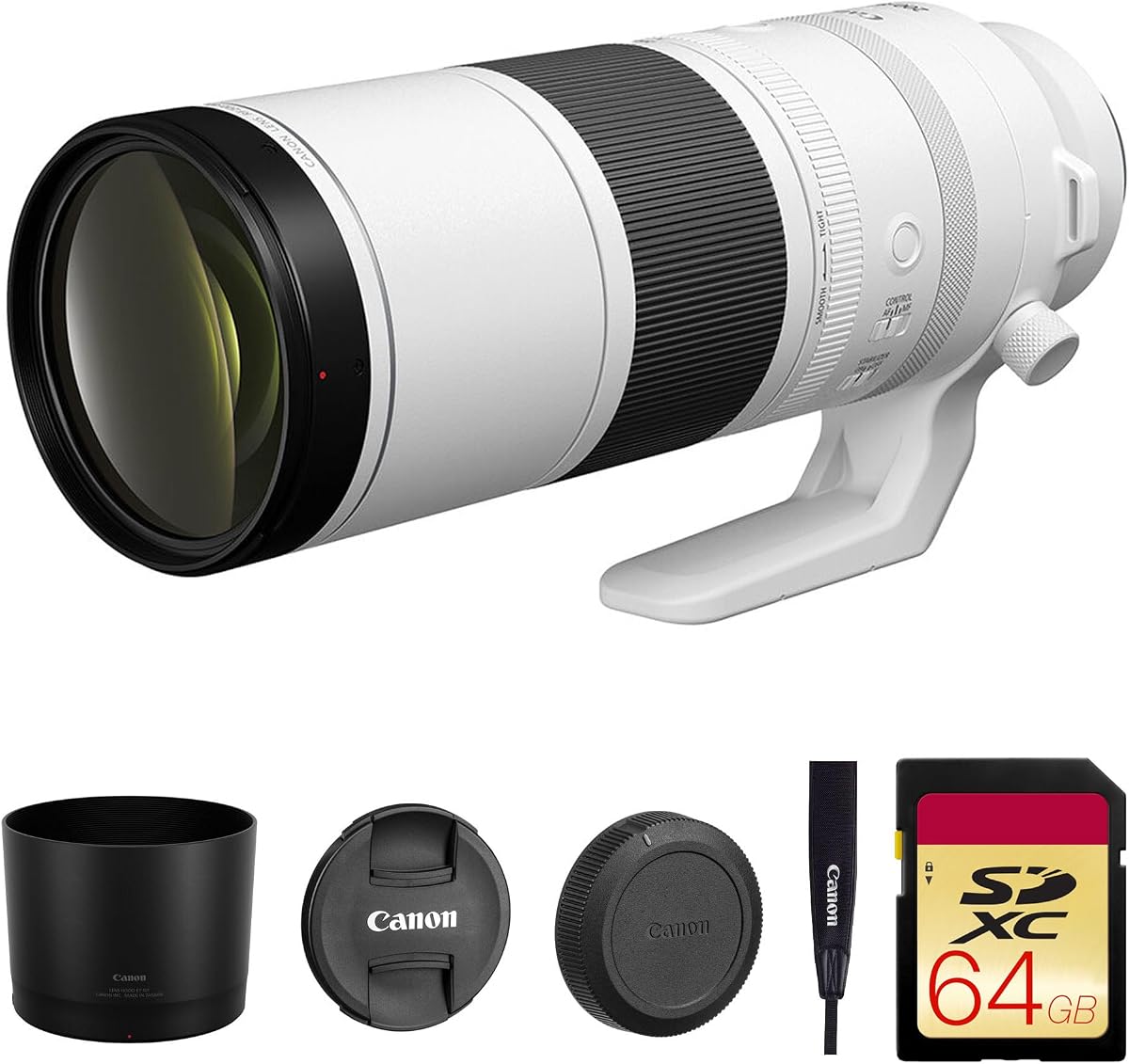
4.7Editor score

4.0Editor score
The following table provides a side-by-side comparison of all ten lenses analyzed in this guide. It highlights key specifications like focal range, mount type, and stabilization to help you quickly identify the right tool for your wildlife photography needs.



This Canon RF lens represents a top choice for serious wildlife photographers seeking extreme reach without excessive bulk. With a rating of 4.7 out of 5, users praise its ability to capture sharp images of birds and distant animals. The inclusion of a memory card adds immediate value for field use.
We may earn a commission when you buy through this link, at no additional cost to you.
The standout feature is its unmatched zoom flexibility, spanning from 200mm to 800mm. This range allows photographers to frame subjects tightly even when they are far away. The built-in image stabilization ensures shake-free results at full zoom, making handheld shooting viable for extended periods. The fast USM autofocus system delivers sharp focus quietly and quickly, essential for tracking moving wildlife without startling them.
One trade-off is the variable aperture, which narrows to f/9 at the longest focal length. This can limit low-light performance compared to fixed-aperture primes. However, the lightweight and field-ready design mitigates fatigue during long hikes. Most users find the image quality and reach worth the slight compromise in light gathering.
This lens is ideal for wildlife enthusiasts who already use Canon RF mirrorless cameras and want professional-grade performance. It balances optical excellence with portability better than most competitors. We recommend this for photographers prioritizing reach and stabilization in a handheld package.
The 800mm maximum focal length brings distant animals into clear view without needing additional teleconverters.
Integrated stabilization supports sharp results even when tripod mounting is not possible in the field.
We may earn a commission when you buy through this link, at no additional cost to you.
This lens is the world's first AF super-telephoto zoom with a 800mm telephoto end, setting a new standard for mirrorless wildlife photography. Its rating of 4.6 reflects strong user satisfaction with its optical performance and usability. The design prioritizes mobility without sacrificing the ability to capture distant subjects clearly.
We may earn a commission when you buy through this link, at no additional cost to you.
Its powerful telephoto capabilities cover a zoom range from 200mm through 800mm, providing versatility for various wildlife scenarios. The lens is compatible with Extender RF1.4x and Extender RF2x at all focal lengths, allowing even greater reach when needed. The lightweight and compact design makes it easier to carry on long treks compared to traditional super-telephoto options.
The optimized optical design takes advantage of the RF mount to maintain high image quality through the zoom range. While some users may find the price point higher than entry-level alternatives, the build quality justifies the investment. The ability to use extenders effectively doubles its utility for extreme distance work.
Ideal for Canon RF users seeking a versatile super-telephoto solution, this lens excels in both wildlife and sports photography. Its balance of size and performance makes it a strong contender for travel and field work. We suggest it for photographers who value portability alongside professional optical results.
The 200mm to 800mm span offers flexibility for framing subjects from moderate to extreme distances.
Support for 1.4x and 2x extenders allows for even longer reach without compromising autofocus performance.
We may earn a commission when you buy through this link, at no additional cost to you.
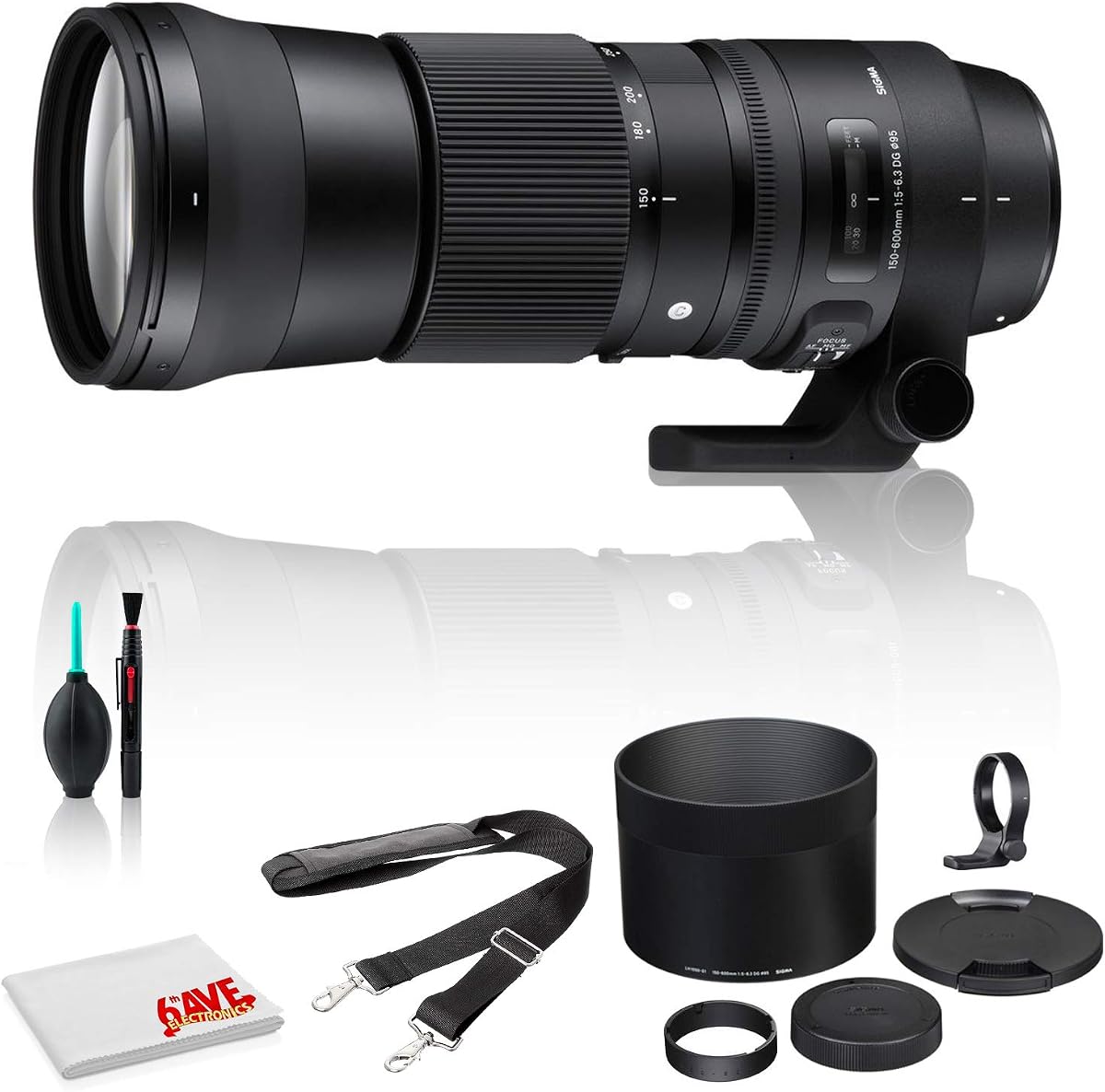
Sigma's Contemporary lens offers a compelling balance of performance and price for Canon EF mount users. With a 4.5 rating, it is well-regarded for its sharpness and build quality. The bundle includes a deluxe cleaning kit, adding practical value for field maintenance and lens care.
We may earn a commission when you buy through this link, at no additional cost to you.
The optical construction includes one FLD and three SLD elements to minimize chromatic aberrations across the zoom range. The Hyper Sonic Motor AF system ensures quick and quiet focusing, which is crucial for wildlife that may be spooked by noise. The Optical Stabilizer with Accelerometer helps reduce camera shake for sharper handheld shots.
A notable limitation is the aperture range, which narrows to f/6.3 at 600mm. This can require higher ISO settings in low light compared to wider aperture lenses. However, the image quality and reach remain excellent for the price point. The lens is designed for full-frame cameras but also works well on APS-C bodies with increased effective reach.
This lens is recommended for wildlife photographers using Canon DSLRs who want professional results without breaking the bank. It provides a reliable tool for capturing birds and mammals from a safe distance. We consider it a top choice for those prioritizing optical value and bundle convenience.
Low dispersion glass elements ensure high sharpness and color fidelity throughout the zoom range.
The included cleaning kit makes it easier to maintain lens clarity during outdoor expeditions.
We may earn a commission when you buy through this link, at no additional cost to you.
This manual telephoto lens offers incredible reach at a fraction of the cost of autofocus options. Rated 4.0, it is a favorite among hobbyists who want to try long-distance photography without a large investment. The high index, low dispersion multi-coated optical glass assures clear, sharp photos every time when used correctly.
We may earn a commission when you buy through this link, at no additional cost to you.
The standout feature is the 2X teleconverter that doubles the lens power to a groundbreaking 1000mm. This allows photographers to capture elusive wildlife or celestial wonders that would otherwise be out of reach. The EF-Mount compatibility ensures it secures to many Canon DSLR models with ease, maximizing camera-lens integration for superior picture quality.
The main trade-off is the lack of autofocus, requiring manual precision to fine-tune shots. This can be challenging for fast-moving subjects but offers complete creative control over images. The durable black finish and robust construction make it a reliable companion for outdoor adventures where equipment may face rough handling.
This lens is perfect for beginners or budget-conscious photographers looking to experiment with super-telephoto focal lengths. It provides a low-risk entry point into wildlife photography where reach is more important than speed. We recommend it for patient shooters who prioritize affordability and magnification.
The 1000mm reach with teleconverter brings distant animals into frame without needing expensive optics.
Affordable pricing allows photographers to test telephoto capabilities without major financial commitment.
We may earn a commission when you buy through this link, at no additional cost to you.
This professional L-series lens is a workhorse for Canon DSLR users seeking reliable performance in varied conditions. With a 4.0 rating, it is trusted by wildlife photographers for its consistent sharpness and durability. The bundle includes a filter kit and lens cap keeper, offering added convenience for field use.
We may earn a commission when you buy through this link, at no additional cost to you.
Its advanced optical construction uses one fluorite element and four aspherical elements to minimize chromatic and spherical aberrations. A floating element system maintains consistent sharpness, contrast, and color accuracy throughout both the zoom and focus ranges. The built-in optical image stabilization reduces camera shake by up to two shutter speed stops, improving handheld shooting in low light.
The ring-type Ultrasonic Motor delivers fast, precise, and quiet autofocus with full-time manual override. This is essential for tracking moving wildlife without interrupting the shot. While the price is higher than entry-level options, the optical quality and build justify the cost for professionals and serious enthusiasts.
We recommend this lens for photographers who already own Canon EF mount DSLRs and demand professional results. It excels in sports and wildlife photography where speed and clarity are paramount. The versatile 100-400mm range offers flexibility for subjects at varying distances.
Premium glass elements ensure high-quality images with minimal color fringing even at full zoom.
The rotating tripod collar provides balanced support for vertical and horizontal shooting on a tripod.
We may earn a commission when you buy through this link, at no additional cost to you.
This lens offers one of the longest reach options available for Canon DSLR users on a budget. With a 4.0 rating, it is known for bringing distant subjects closer than ever thought possible. The high-power telephoto design is specifically targeted for capturing clear long-distance camera shots of wildlife or landscapes.
We may earn a commission when you buy through this link, at no additional cost to you.
The standout feature is its enhanced zoom capability, reaching up to 1600mm when using the included 2X teleconverter. This extreme reach allows photographers to capture elusive wildlife or celestial wonders from a safe distance. The sophisticated f/8.3 aperture ensures photos are crisp and clear, highlighting your subject matter beautifully when light conditions are favorable.
Manual operation is a limitation for tracking fast-moving animals, but it provides precise control for static or slow-moving subjects. The EF-Mount compatibility ensures it secures to your DSLR with ease, maximizing camera-lens integration for superior picture quality. Its design prioritizes magnification and clarity for those needing maximum range.
This lens is ideal for photographers who need extreme zoom without investing in professional-grade optics. It suits patient shooters who can manage manual focus and prefer affordability. We recommend it for landscape and birding enthusiasts seeking high magnification value.
The 1600mm equivalent capability brings subjects in close for detailed shots from far away.
Manual focus allows for careful adjustments to ensure sharpness on specific animal features.
We may earn a commission when you buy through this link, at no additional cost to you.
This RF telephoto lens is designed for versatility and portability, making it a strong option for travelers. With a 4.6 rating, users appreciate its high image quality in a compact package. The lens covers a versatile zoom range of 100-400mm, suitable for wildlife and sports photography alike.
We may earn a commission when you buy through this link, at no additional cost to you.
Its optical image stabilizer offers up to 5.5 stops of shake correction, which improves handheld shooting significantly. When paired with EOS R series cameras featuring In-Body Image Stabilizer, it provides up to 6 stops of shake correction. The high speed, smooth and quiet autofocus with Canon's Nano USM ensures quick tracking of moving subjects.
The minimum focusing distance of 2.89 feet at 200mm allows for closer shots of wildlife when needed. While the reach is not as extreme as 800mm lenses, the compact size makes it easier to carry all day. The design prioritizes ease of use without sacrificing optical performance for general wildlife needs.
This lens is ideal for Canon RF users who value portability and travel-friendly gear. It balances reach and weight better than most competitors in its class. We suggest it for photographers needing a reliable lens for both casual and semi-professional wildlife work.
Strong image stabilization enables sharp handheld shots even at longer focal lengths.
Compact and lightweight design makes it easy to carry during long outdoor hikes.
We may earn a commission when you buy through this link, at no additional cost to you.
This classic entry-level lens provides an affordable starting point for Canon SLR users interested in telephoto photography. With a 4.7 rating, it is well-regarded for its reliability and ease of use. The lens measures 2.8 inches in diameter and 4.8 inches long, making it easy to carry in a backpack.
We may earn a commission when you buy through this link, at no additional cost to you.
The improved mechanism makes zooming smoother compared to previous versions, enhancing the user experience. While it lacks image stabilization, the lightweight design helps reduce shake. The closest focusing distance of 4.9 feet and 32- to 8-degree diagonal angle of view allow for decent framing of nearby subjects.
One limitation is the lack of stabilization, which can lead to blur in low light without a tripod. However, for bright outdoor wildlife shooting, it performs adequately. The 1-year warranty provides additional peace of mind for new photographers entering the hobby.
This lens is recommended for beginners who want to experiment with telephoto focal lengths on a budget. It serves well as a secondary lens for casual wildlife photography. We suggest it for those prioritizing affordability and compactness over maximum reach.
Low cost allows beginners to explore telephoto photography without a significant financial outlay.
Lightweight construction makes it easy to carry on hikes or outdoor adventures.
We may earn a commission when you buy through this link, at no additional cost to you.
This Nikon lens is crafted for FX image sensors but also delivers versatile performance on DX sensors. With a 4.2 rating, it is praised for its clarity and value when bundled with accessories. The bundle includes a filter kit, lens cap keeper, and cleaning kit, making it ready for immediate field use.
We may earn a commission when you buy through this link, at no additional cost to you.
The incorporation of three extra-low dispersion elements substantially diminishes color fringing and chromatic aberrations, fostering superior clarity and color precision. The Silent Wave Motor ensures rapid, silent, and accurate autofocus, complemented by full-time manual focus override. The Vibration Reduction image stabilization system minimizes the impact of camera shake by up to 4.5 stops.
A dedicated Sport Mode is ideal for fast-paced situations, helping track moving wildlife effectively. The rotating tripod collar provides stable and balanced support, making it ideal for photography with a tripod or monopod. While the weight can be substantial, the optical quality justifies the build.
This lens is recommended for Nikon users seeking a powerful telephoto solution with a complete kit. It excels in wildlife and sports photography where stabilization and reach are critical. We suggest it for photographers who prioritize optical performance and bundle completeness.
Extra-low dispersion elements ensure sharp, clear images free from color fringing.
Included accessories like cleaning kits simplify gear maintenance during outdoor shoots.
We may earn a commission when you buy through this link, at no additional cost to you.
This renewed option provides a sustainable way to acquire a reliable telephoto lens for wildlife photography. With a 4.7 rating, it offers the same performance characteristics as new units at a reduced cost. The lens features an aperture range of f/4-5.6 and a DC autofocus motor for consistent operation.
We may earn a commission when you buy through this link, at no additional cost to you.
Its dimensions measure 2.8 inches in diameter and 4.8 inches long, weighing only 16.8 ounces. This lightweight profile makes it easy to carry during long outings. The closest focusing distance of 4.9 feet and 32- to 8-degree diagonal angle of view allow for standard framing of subjects.
While it lacks image stabilization, the improved zoom mechanism ensures smooth operation. The renewed condition means it has been inspected to meet quality standards, offering a lower-risk purchase. For those on a strict budget or seeking an eco-friendly option, this is a compelling choice.
This lens is ideal for photographers looking for a budget-friendly telephoto option without compromising on basic quality. It serves well as a backup lens for travel or casual wildlife work. We suggest it for those prioritizing value and sustainability in their gear choices.
Renewed options provide access to quality optics at a fraction of the new retail price.
Choosing renewed gear reduces electronic waste while still delivering strong imaging results.
We may earn a commission when you buy through this link, at no additional cost to you.
Selecting the right lens for wildlife photography requires balancing focal length, stabilization, and compatibility. This guide breaks down the key factors to consider before making your purchase to ensure you capture sharp, high-quality images.
Focal length determines how close you can get to your subject. For wildlife, a minimum of 200mm is recommended, with 400mm or more ideal for birds and shy animals. Lenses offering 600mm to 800mm provide extreme reach for distant subjects without intrusion.
Choose a focal range that matches your shooting distance and subject behavior. Longer focal lengths bring distant animals closer but may require more stabilization to prevent blur.
Image stabilization is critical for handheld shooting at long distances. Look for lenses with Optical Image Stabilization (OIS) or Vibration Reduction (VR) to counteract camera shake. This allows you to use slower shutter speeds without blurring your shots.
Optical stabilization helps maintain sharpness especially when using tripods is not feasible. It is especially important for lenses with focal lengths beyond 400mm where even small movements are magnified.
Fast and accurate autofocus is essential for capturing moving animals. Ultra-Sonic Motors (USM) or Silent Wave Motors (SWM) deliver quick and quiet focusing. This is vital for wildlife that may be startled by noise during the capture process.
Prioritize lenses with full-time manual override to fine-tune focus manually when needed. Silent autofocus systems prevent disturbance to the subject ensuring natural behavior during photography.
Ensure the lens matches your camera's mount system. Canon EF lenses work on DSLRs while RF lenses are for mirrorless R-series cameras. Nikon F-mount lenses are compatible with Nikon DSLRs. Always check specific camera model compatibility before purchasing.
Using the correct mount ensures seamless communication between lens and camera. Mismatched mounts may require adapters which can degrade performance or limit functionality.
Look for lenses with specialized glass elements like Fluorite or Low Dispersion (LD) glass. These elements minimize chromatic aberrations and improve overall sharpness and color accuracy. High-quality optics are critical for detailed images of animals.
Superior optical construction ensures images remain sharp across the entire zoom range. Investing in a lens with advanced elements pays off in image clarity and professional results.
Long telephoto lenses can be heavy and cumbersome. Consider the weight relative to your hiking needs and physical stamina. Lightweight designs are preferred for field work where you carry gear for extended periods without support.
Balancing reach with weight is key to maintaining mobility. A lighter lens reduces fatigue and allows for more spontaneous shooting in the field.
Some lenses come bundled with accessories like filter kits, cleaning kits, or caps. These inclusions add value and prepare you for immediate field use. Check what is included in the box to avoid buying extras separately.
Bundles often reduce the total cost of ownership by providing essential gear upfront. They simplify the purchasing process and ensure you have necessary tools right away.
Telephoto lenses range from entry-level to professional pricing. Determine your budget early to narrow down options. Consider renewed or bundle options for better value without sacrificing core performance.
Align your budget with the features you need most. Entry-level lenses may lack stabilization or fast autofocus but can still deliver great results for beginners.
To use your long-distance lens effectively, start by securing a firm grip or mounting it on a sturdy tripod. Stabilization is key at high focal lengths to prevent blur. Enable image stabilization if your lens supports it for handheld shots in bright conditions.
Clean the lens regularly using a soft brush and microfiber cloth to remove dust and moisture. Avoid touching the glass surface with fingers to prevent oils and smudges. Store the lens in a dry, cool place when not in use to protect internal elements from humidity.
Practice panning techniques to track moving wildlife smoothly. Adjust your shutter speed to match the subject movement to capture sharp images without blur. Regular practice with manual focus settings will improve your ability to handle dynamic situations.
For wildlife photography, a focal length between 400mm and 600mm is generally ideal. This range allows you to capture animals from a safe distance without disturbing them. Shorter lenses like 200mm may work for larger animals but often lack reach for birds or shy species.
Yes, image stabilization is highly recommended for long telephoto lenses. It helps counteract camera shake which becomes more pronounced at high focal lengths. Stabilization allows you to shoot handheld with slower shutter speeds while maintaining sharpness.
It depends on the brand and mount. Canon RF lenses are designed for mirrorless but can use EF lenses with adapters. Nikon F-mount lenses work on DSLRs and can use adapters for mirrorless bodies. Always check specific mount compatibility for best performance.
Autofocus is usually preferred for fast-moving wildlife due to its speed and accuracy. Manual focus is useful for precise control when subjects are stationary or when AF struggles. Many modern lenses offer full-time manual override for flexibility.
Use a weather-resistant cover or rain sleeve when shooting outdoors. Keep the lens dry by wiping moisture off immediately after use. Store lenses in a sealed bag with silica gel packets to prevent humidity damage during storage.
Teleconverters can extend focal length by 1.4x or 2x but may reduce light and autofocus speed. They are useful for extra reach when a lens is already long. However, they may impact image quality slightly so test before relying on them.
Wider apertures like f/5.6 or f/8 are commonly used for wildlife to allow more light. This helps maintain faster shutter speeds to freeze motion. Narrower apertures like f/11 or f/16 reduce light and may require higher ISO settings.
Yes, many modern telephoto lenses have sufficient stabilization to shoot handheld. However, a tripod provides more stability especially for long sessions or low-light conditions. Consider using a monopod for a balance between mobility and support.
Choosing the right lens for long-distance wildlife photography depends on your camera system, budget, and specific needs. Our top picks like the Canon RF 200-800mm offer exceptional reach and stabilization, while budget options like the 500mm manual lens provide value.
Prioritize optical quality and stabilization to ensure sharp images even at extreme distances. Consider how portable the lens is for your typical shooting environment. A lighter lens encourages longer field sessions and more opportunities to capture wildlife.
Always verify current availability and check for any latest firmware or accessory updates before buying. Prices and stock vary so comparing retailers can help you find the best deal for your gear.