This guide compares the top Arduino ADC boards for precision analog sensing, data acquisition, and multi-channel projects to help you choose the right module.
As an Amazon Associate we earn from qualifying purchases. We may earn a commission when you buy through links on this page, at no additional cost to you. Read our affiliate disclosure.As an Amazon Associate we earn from qualifying purchases.Purchases through our links may earn us a commission, at no extra cost to you. Read our affiliate disclosure.
Selecting the right analog to digital converter is crucial for any electronics project involving sensors. An Arduino ADC board expands the capabilities of microcontrollers by allowing precise measurement of analog signals that standard pins cannot handle effectively.
We evaluated ten highly rated modules based on resolution, channel count, communication interfaces, and overall build quality. Each product offers unique advantages for different applications ranging from simple voltage monitoring to complex multi-sensor data logging systems.
Every pick highlights key specifications and ideal use cases to streamline your decision making process. Keep in mind that stock availability and pricing fluctuate regularly so verify current details before finalizing your purchase decisions today.
Top 3 Picks for Best Arduino ADC Board
Best Budget
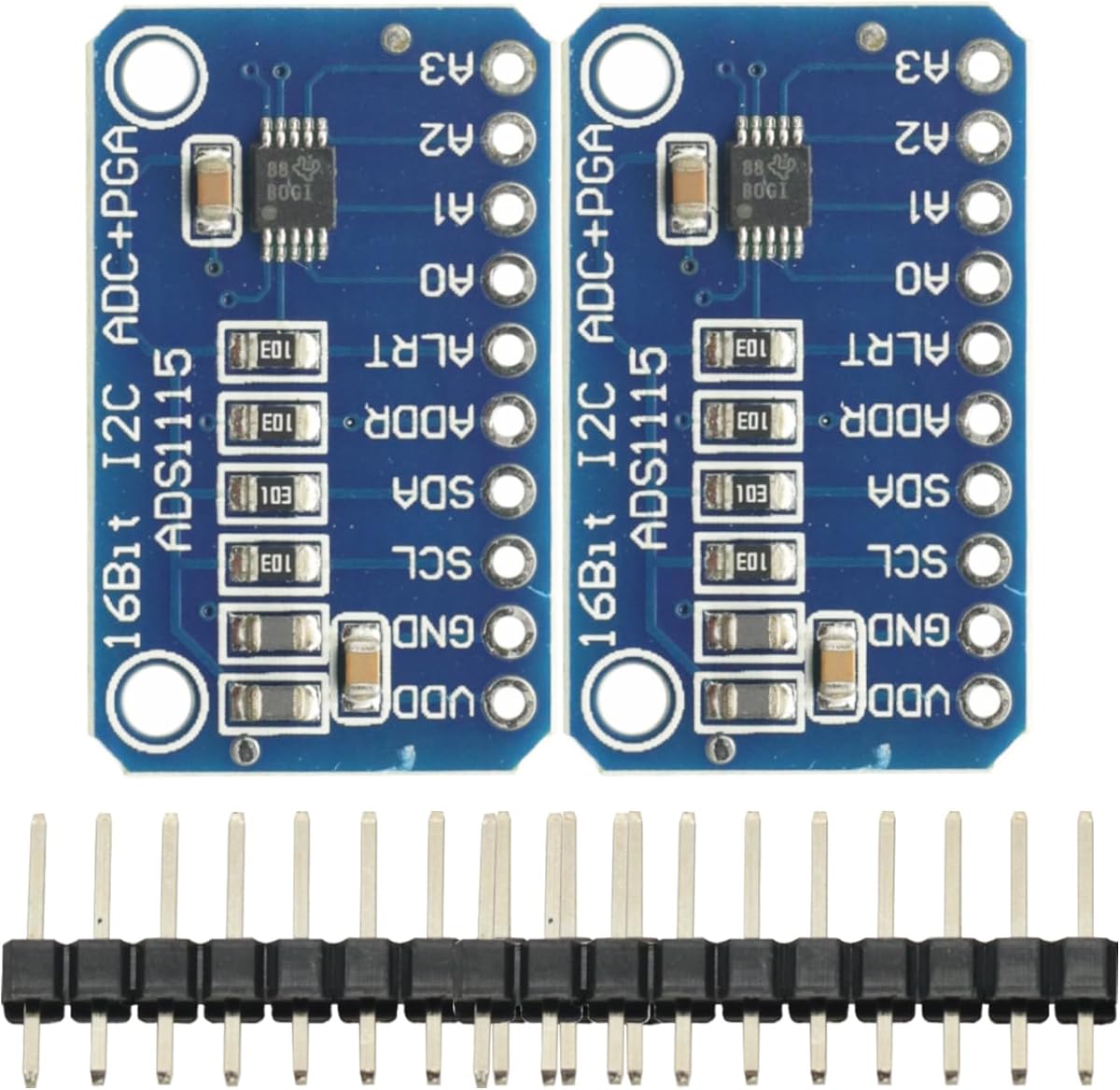
2Pcs ADS1115 16 Bit I2C Module Precision ADC 4 Channel Analog-to-Digital Converter Development Board Pro Gain Amplifier for Arduino Raspberry Pi ADC Module
The following table provides a side-by-side overview of the top ten analog to digital converter modules available for Arduino and compatible microcontrollers. Use this comparison to quickly identify the specifications that matter most for your specific project requirements.
HiLetgo ADS1256 5V 8 Channel 24 Bit ADC Data Acquisition Board Module High Precision AD Collecting Data Acquisition Card
24 bit resolution
8 input channels
30ksps rate
SPI communication
This module stands out as the top choice for users needing extreme precision in their analog data collection projects. With a remarkable 24 bit resolution and 8 channels it outperforms standard 16 bit solutions in accuracy and channel density.
Pros
Exceptional 24 bit resolution
Eight channels for complex arrays
Onboard reference voltage
Low nonlinearity error
Suitable for professional use
Cons
Requires SPI knowledge
Higher cost than standard 16 bit
We may earn a commission when you buy through this link, at no additional cost to you.
The onboard high precision TI ADS1256IDB ADC chips ensure reliable measurements while the ADR03 2.5V datum voltage source chips provide stable reference points. Data output rates up to 30ksps with nonlinearity as low as ±0.0010% make it ideal for scientific instrumentation.
While the SPI interface might seem more complex than I2C it offers faster throughput for high speed sampling needs. The configuration flexibility for single ended or differential inputs allows versatile sensor integration across various industrial and research applications.
If your project demands the highest fidelity analog readings this board is the definitive solution. It is best suited for engineers and advanced hobbyists working on load cells strain gauges or multi sensor data logging systems requiring meticulous accuracy.
Unmatched Resolution for Precision Sensing
The 24 bit resolution captures minute voltage changes that 16 bit converters might miss ensuring detailed signal analysis for critical measurements.
Flexible Input Configuration Options
Configure the module as either 8 single-ended inputs or 4 differential inputs to adapt to diverse sensor types and circuit requirements easily.
2Pcs ADS1115 16 Bit I2C Module Precision ADC 4 Channel Analog-to-Digital Converter Development Board Pro Gain Amplifier for Arduino Raspberry Pi ADC Module
16 bit precision
4 input channels
I2C interface
Programmable data rate
This 2 pack offers an exceptional entry point for anyone needing reliable analog to digital conversion without breaking the bank. A perfect 5.0 rating reflects consistent quality and performance across multiple units for Arduino Raspberry Pi users.
Pros
Perfect 2 pack value
High user ratings
Standard I2C communication
Wide input voltage range
Multiple input range options
Cons
Limited to 4 channels
Lower sample rate than high end
We may earn a commission when you buy through this link, at no additional cost to you.
Each board features a 16 bit ADC with 4 channels supporting up to 2 differential inputs. Programmable data rates from 8sps to 860sps and seven input range options allow you to optimize sensitivity for different sensor outputs.
The only limitation is the 4 channel count which may require multiple boards for larger arrays but the simplicity and cost efficiency often outweigh this for small to medium projects. The I2C interface keeps wiring minimal.
Ideal for students hobbyists and prototyping teams this pack provides spares while ensuring enough coverage for most sensor setups. It delivers robust performance for standard voltage measurement tasks with reliable gain amplification included.
Exceptional Value for Multiple Projects
Purchasing two units allows you to build redundant systems or complete multi board projects without needing separate orders saving time and shipping costs.
Versatile Voltage Range Support
Input voltage from 2.0 to 5.5 volts with channel input voltage from 0 to VDD ensures compatibility with both 3.3V and 5V logic systems.
Lonely Binary 3-Pack ADS1115 16-Bit ADC I2C Module for C++ & ESP32
16 bit resolution
Gold plated finish
I2C interface
3.3V and 5V
Lonely Binary delivers premium quality with their 3-pack of ADS1115 modules featuring an ENIG gold plated finish that ensures superior solderability and oxidation resistance. This thoughtful design choice sets them apart from generic alternatives in durability.
Pros
ENIG gold plated finish
Australian designed brand
Open source library support
Chain up to 16 channels
Pre-soldered headers
Cons
Slightly higher price point
Requires logic level awareness
We may earn a commission when you buy through this link, at no additional cost to you.
The modules work seamlessly with both 3.3V and 5V systems without needing level shifters and support chaining up to four units for 16 total channels via selectable I2C addresses. Comprehensive library support for C++ MicroPython and CircuitPython simplifies development.
While the price is higher than basic units you gain confidence in long-term reliability and community support. The open-source friendly brand focus makes it perfect for educational institutions and developers who value transparency and robust component design.
Choose this option if reliability and long-term project stability are priorities. The pre-soldered headers and RoHS-compliant construction make assembly straightforward for classroom labs IoT nodes or any application where quality materials matter.
Superior Durability with Gold Plating
The ENIG electroless nickel immersion gold plating provides excellent oxidation resistance ensuring consistent electrical contact over years of operation.
Scalable Multi-Module Architecture
With four selectable I2C addresses you can connect up to four modules on one bus expanding your analog input capacity to 16 channels easily.
Teyleten Robot ADS1115 16 Bits 4 Channel Analog-to-Digital Converter Precised Develop Board Module Amplifier Board ADC I2C IIC for Arduino Raspberry Pi (Pack of 3pcs)
16 bit resolution
4 channels
Internal PGA
Auto shut down
This pack of three ADS1115 modules offers a practical solution for builders needing multiple units for large scale sensor arrays or classroom setups. The 4.7 rating indicates reliable performance and customer satisfaction across diverse application scenarios.
Pros
Three pack for spares
Internal PGA available
Ultra-small footprint
Wide supply voltage range
Comparator mode support
Cons
Basic packaging
Standard sample rate limits
We may earn a commission when you buy through this link, at no additional cost to you.
Features include an internal PGA on the ADS1115 variant and programmable data rates from 8sps to 860sps. The ultra-small leadless design saves board space while the wide supply range from 2.0V to 5.5V ensures flexible power options.
Single-shot mode with auto shut down helps conserve power in battery operated systems. While the sample rate is not as high as specialized ADCs it is sufficient for most environmental monitoring and control applications.
Ideal for bulk projects or educational labs this set provides enough units to equip multiple stations. The inclusion of programmable gain amplifiers means you can optimize readings for sensors with varying signal levels without external components.
Integrated Programmable Gain Amplifier
The onboard PGA allows precise scaling of input signals enabling accurate measurement of low voltage sensors like thermocouples directly.
Power Saving Auto Shut Down
Single-shot mode with auto shut down minimizes current consumption making this module suitable for battery-powered or energy-efficient IoT deployments.
HiLetgo 3pcs ADS1115 16 Bit 16 Byte 4 Channel I2C IIC Analog-to-Digital ADC PGA Converter with Programmable Gain Amplifier High Precision ADC Converter Development Board for Arduino Raspberry Pi
16 bit resolution
4 channels
Comparator mode
I2C communication
This 3-piece set from HiLetgo is particularly well suited for Raspberry Pi users who lack analog GPIO pins. A 4.3 rating suggests consistent utility for expanding analog sensing capabilities without complex wiring or additional hardware.
Pros
Three units in pack
Easy I2C use
Great for Pi GPIO
Wide voltage range
High precision ADC
Cons
Mixed ratings on quality
Basic documentation
We may earn a commission when you buy through this link, at no additional cost to you.
The modules offer high precision 16-bit conversion with a programmable gain amplifier. Operating across a wide voltage supply range from 2.0V to 5.5V they integrate easily with both 3.3V and 5V systems commonly found in hobby electronics.
A unique comparator mode helps maintain accuracy by allowing threshold comparisons directly on the module. This is useful for simple alarm systems or control loops where precise voltage levels trigger actions automatically.
For Pi-based home automation or data logging this pack provides the necessary hardware to capture multiple analog signals. The straightforward I2C interface minimizes software complexity allowing you to focus on application logic rather than driver issues.
Seamless Raspberry Pi Integration
The I2C interface is ideal for Raspberry Pi users needing analog inputs without adding extra GPIO extenders or HATs.
Comparator Mode for Threshold Detection
Built-in comparator mode enables direct voltage threshold comparisons simplifying implementation of alarm triggers or control signals.
This bulk pack of four ADS1115 boards is designed for projects requiring extensive channel coverage or classroom setups. A 4.1 rating reflects functional performance that meets standard expectations for basic analog conversion needs.
Pros
Four pack value
Internal oscillator included
Differential inputs supported
Single-shot mode
Wide input range
Cons
Lower rating average
Variable module quality
We may earn a commission when you buy through this link, at no additional cost to you.
Each board provides four differential input channels allowing simultaneous sampling of four signals. The internal oscillator ensures stable timing for data conversion while the programmable gain amplifier supports different input range configurations.
Single-shot mode with auto shut down reduces power consumption making it viable for battery powered deployments. The wide voltage supply range from 2.0V to 5.5V ensures compatibility with diverse microcontroller power rails.
If you need maximum channel count per order this pack delivers significant value. It is best suited for large scale sensor networks or educational environments where quantity and reliability are both important factors.
Internal Oscillator Stability
The internal oscillator maintains precise timing for data conversion reducing external component requirements and simplifying circuit design.
Multiple Input Range Flexibility
Programmable gain amplifier allows adjustment of input ranges to match sensor outputs optimizing resolution for low or high voltage signals.
2PCS ADS1115 16 Bit IIC I2C Analog to Digital Converter Module Precision ADC Converter 4 Channel Development Board Programmable Gain Amplifier 2.0V to 5.5V for Arduino Raspberry Pi
16 bit precision
4 channels
I2C interface
7 input ranges
This pair of ADS1115 modules holds a perfect 5.0 rating demonstrating exceptional reliability and customer satisfaction. It is a strong choice for standard analog projects needing precision without the complexity of higher end boards.
Pros
Perfect 5.0 rating
Wide input voltage
Programmable data rate
7 input range types
I2C compatible
Cons
Standard speed limits
Two unit limit
We may earn a commission when you buy through this link, at no additional cost to you.
Each unit supports 4 channels with programmable data rates from 8sps to 860sps. Seven input range types from ±0.256V to ±6.144V allow precise tuning for sensors ranging from microvolt outputs to standard 5V signals.
The I2C interface keeps wiring simple and supports chaining multiple modules for expanded input capacity. Wide voltage support from 2.0V to 5.5V ensures these boards adapt to various logic levels found in mixed voltage systems.
If you prioritize reliability and flexible input ranges this set is an excellent starting point. It works reliably for temperature monitoring voltage sensing or general data acquisition tasks in both Arduino and Raspberry Pi environments.
Seven Customizable Input Ranges
Seven distinct input range options let you select the optimal gain for specific sensors maximizing accuracy across different voltage levels.
Flexible Voltage Compatibility
Operation from 2.0V to 5.5V ensures seamless integration with 3.3V and 5V logic systems without level shifting complications.
Teyleten Robot AD7606 Module Multi-Channel AD Data Acquisition Module 16-bit ADC 8-Channel Synchronization Sampling Frequency 200KHz
16 bit resolution
8 channels
200KHz sampling
SPI protocol
This module is built for high-speed data acquisition with a 200KHz sampling frequency across 8 channels. While the 3.0 rating suggests it may be challenging to integrate it offers capabilities that standard modules cannot match.
Pros
200KHz sampling rate
8 channel synchronization
±10V input range
Parallel or serial output
Internal reference voltage
Cons
Lower rating average
More complex integration
We may earn a commission when you buy through this link, at no additional cost to you.
It supports simultaneous sampling of 8 channels with an input voltage range of ±5V or ±10V. The SPI protocol enables rapid data transfer making it suitable for applications where signal timing is critical.
Oversampling modes and internal reference voltage help maintain measurement accuracy under varying conditions. However the complexity of handling parallel or serial outputs requires more advanced knowledge of microcontroller interfacing.
Select this board if you need high-frequency signal analysis such as motor control or vibration monitoring. It is best reserved for engineers comfortable with SPI timing and advanced firmware development.
High-Speed Synchronous Sampling
The 200KHz sampling rate across 8 channels enables precise capture of rapidly changing analog signals for advanced analysis.
Wide Input Voltage Range
Accepting ±5V or ±10V inputs allows direct measurement of industrial signals without external attenuators or amplifiers.
This 4-piece set provides ample hardware for distributed sensing or multiple project setups. A 4.6 rating highlights consistent quality and performance across units for diverse microcontroller platforms.
Pros
Four units included
High precision ADC
Easy I2C integration
Compatible with STM32
Programmable gain amp
Cons
Standard 16-bit limits
Basic packaging
We may earn a commission when you buy through this link, at no additional cost to you.
Each module delivers high precision 16-bit conversion with 4 channels. The I2C interface simplifies wiring requiring only two pins for communication making it easy to integrate into existing systems.
Wide compatibility with popular platforms including Arduino Raspberry Pi ESP32 and STM32 makes it versatile for mixed ecosystems. The built-in programmable gain amplifier ensures accurate readings across various sensor types.
Ideal for teams or students needing multiple units this pack supports large scale projects efficiently. The reliable performance and broad platform support make it a dependable choice for educational and commercial prototypes.
Cross-Platform Compatibility
Support for Arduino Pi ESP32 and STM32 ensures seamless adoption across diverse hardware environments without custom drivers.
Simplified I2C Integration
Standard I2C wiring with just SDA and SCL pins reduces complexity saving time on PCB routing and breadboard connections.
HiLetgo ADS1115 16 Bit 16 Byte 4 Channel I2C IIC Analog-to-Digital ADC PGA Converter with Programmable Gain Amplifier High Precision ADC Converter Development Board for Arduino Raspberry Pi
16 bit resolution
4 channels
Auto shut down
Wide voltage supply
This single HiLetgo module offers a straightforward solution for basic analog to digital conversion needs. A 4.3 rating indicates reliable functionality for users needing a quick upgrade to their sensor capabilities.
Pros
Single unit purchase
Easy to use
Wide voltage range
Comparator mode
High precision ADC
Cons
No multi-pack savings
Standard features only
We may earn a commission when you buy through this link, at no additional cost to you.
Featuring 16-bit resolution and 4 channels with a programmable gain amplifier it balances performance and ease of use. The wide voltage supply range from 2.0V to 5.5V allows operation across common logic levels.
A comparator mode feature helps maintain accuracy by triggering at specific voltage thresholds. Single-shot mode with auto shut down conserves power in battery operated scenarios.
Best for simple add-on tasks or replacements this board delivers consistent results without bulk. It is ideal for single project needs or prototyping where purchasing in quantity is unnecessary.
Simple Single Unit Purchase
Buying one unit is perfect for small projects needing just one converter without the commitment of larger bulk packs.
Power Efficient Operation
Auto shut down in single-shot mode minimizes energy usage extending battery life for portable IoT deployments.
We may earn a commission when you buy through this link, at no additional cost to you.
Buying Guide – How to Choose the Best Arduino ADC Board
Selecting the right analog to digital converter requires balancing resolution channel count and interface type with your specific project needs. This guide breaks down the critical factors to help you make an informed decision.
Resolution and Accuracy
Resolution determines how finely the converter can distinguish voltage differences. A 16-bit board is sufficient for most sensor applications while 24-bit modules offer superior precision for scientific or industrial instrumentation.
Choose higher resolution only if your sensors produce low level signals requiring fine granularity.
Number of Channels
Channel count dictates how many analog inputs you can read simultaneously. Standard 4 channel boards are common but specialized modules with 8 channels are useful for sensor arrays.
Ensure the board supports enough channels for your full sensor array or plan to stack multiple units.
Communication Interface
I2C is popular for simplicity and multi-drop bus support while SPI offers higher throughput for fast sampling rates. Choose the protocol your microcontroller handles best.
I2C is generally preferred for beginners while SPI suits high-speed acquisition projects.
Input Voltage Range
Check that the module supports the voltage range your sensors output. Wide range boards accommodate both 3.3V and 5V logic without additional circuitry.
Mismatched voltage ranges can damage components or produce inaccurate readings.
Programmable Gain Amplifier
A PGA allows you to adjust the input sensitivity enabling accurate measurements of small voltage signals without external amplifiers.
Modules with PGA are essential for thermocouples strain gauges and other low voltage sensors.
Build Quality and Brand
Reputable brands often provide better component consistency and documentation. Gold plated or RoHS compliant builds ensure long term reliability and ease of soldering.
Premium finishes reduce oxidation and improve contact stability in humid environments.
Power Consumption
For battery operated devices look for boards with auto shut down or low power modes. This feature extends operational life significantly.
Efficient modules are crucial for remote IoT sensors where recharging is impractical.
Library and Community Support
Strong library support for your preferred language simplifies development. Open source friendly brands often provide reliable drivers and example code.
Check for available examples in C++ Python or other languages before purchasing.
How to Use and Care for Your Arduino ADC Board
Connect the VCC and GND pins to your microcontroller power supply ensuring voltage compatibility. SDA and SCL pins should connect to the corresponding I2C or SPI pins on your board.
Install the appropriate driver library for your platform and verify communication by reading default values. Use the Arduino IDE or similar environments to load sample code from the manufacturer.
Handle boards with care avoiding excessive heat during soldering. Store unused units in dry environments to prevent oxidation of exposed pads or pins over time.
Frequently Asked Questions
What is the main advantage of using an Arduino ADC board over built-in analog pins?
An external ADC board provides higher resolution typically 16-bit or 24-bit compared to the standard 10-bit on most microcontrollers. It also adds more input channels allowing complex multi-sensor systems to be built without complex wiring.
Can I use these modules with Raspberry Pi?
Yes many of these boards feature I2C or SPI interfaces that are fully supported by the Raspberry Pi. Since Pi lacks native analog pins these modules are essential for reading analog sensors directly on the platform.
How do I connect multiple ADC boards to one Arduino?
Most I2C modules allow you to change their addresses via hardware jumpers. This enables chaining several boards on the same bus to expand your total input channel count without adding more wires.
Is a higher bit resolution always better?
Higher resolution improves measurement precision but increases processing time and cost. For most hobbyist sensor projects 16-bit is sufficient while 24-bit is reserved for high accuracy scientific or industrial tasks.
Do these modules work with 3.3V logic systems?
Many modern modules support both 3.3V and 5V logic without needing level shifters. Always check the voltage specifications before connecting to avoid potential hardware damage due to logic level mismatches.
What kind of sensors require an ADC board?
Sensors producing analog voltage outputs like thermocouples pH probes pressure transducers and light sensors require an ADC to convert signals into digital values readable by microcontrollers.
How fast can these ADC boards sample data?
Sampling rates vary from 8 samples per second to over 200,000 depending on the chip. Standard modules handle slow environmental data while specialized high-speed versions suit audio or vibration analysis.
Final Thoughts on Choosing the Best Arduino ADC Board
The top picks cover a wide range of needs from budget friendly packs to high precision 24-bit modules. HiLetgo ADS1256 leads for accuracy while the Lonely Binary and Teyleten options offer great value and quality finishes.
Prioritize resolution and channel count based on your specific sensor types and project scale. Ensure the interface protocol matches your microcontroller and verify voltage compatibility before making a purchase.
Remember that prices and availability fluctuate regularly so double check current listings before buying. Investing in the right ADC board will save time and improve reliability across all your sensor projects.
This expert guide compares the top 10 AI Kids Alarm Clock options for 2026, evaluating features like sleep training, voice assistants, and educational tools…