
Snapmaker U1 3D Printer,4-Toolhead with 5s Toolchanger,Multi-Color Printing
4.5Editor score
Five second tool changer system
Four independent toolheads available
True multi-material printing support
Discover the top 3D printers for engineering prototypes comparing speed build volume material compatibility and multi-material capabilities for professional
Engineering prototypes require precise, reliable, and versatile 3D printing solutions. Finding the right machine ensures your designs translate accurately into functional parts without costly delays or material waste during development cycles.
We evaluated ten leading 3D printers based on build volume, print speed, material compatibility, and multi-material capabilities. Our analysis focuses on features that matter most to engineers creating functional test parts and complex assemblies.
Each pick highlights specific strengths like heated chambers or tool changers. Note that product availability and pricing change frequently. Always verify current specs and warranties before making your final purchasing decision for your workspace.
4.5Editor score

3.5Editor score
4.7Editor score
This side-by-side comparison highlights key specifications across all ten models. Use these details to match printer capabilities with your specific engineering prototype requirements and workspace constraints effectively.





The Original Prusa XL stands out as a top choice for engineering teams needing large-format multi-material capabilities. Its dual toolhead system allows seamless transitions between materials for complex prototypes and soluble supports without manual intervention.
We may earn a commission when you buy through this link, at no additional cost to you.
Engineers benefit from the segmented heated bed which improves energy efficiency and reduces warping on large prints. The CoreXY motion system ensures accurate fast printing even during complex multi-material operations crucial for functional testing.
While the assembly process requires care due to fragile parts packed separately the lifetime technical assistance and professional customer service support mitigate risks. The intelligent tool switching minimizes purge waste while maintaining high-quality transitions between materials.
This printer is ideal for studios and advanced makers requiring reliable industrial-grade performance at scale. Choose this model if you need large build volumes and multi-material functionality for professional engineering workflows.
The dual tool system enables complex prints with soluble support structures efficiently.
Fully integrated with PrusaSlicer for streamlined multi-material production workflows.
We may earn a commission when you buy through this link, at no additional cost to you.
The Snapmaker U1 delivers unmatched speed in multi-color and multi-material printing through its innovative SnapSwap system. Four independent toolheads allow true multi-color printing without manual filament swaps or purging during jobs.
We may earn a commission when you buy through this link, at no additional cost to you.
Engineering prototypes benefit from the automatic tool changer reducing tool change time from two minutes to just five seconds. This minimizes wasted material during filament changes reducing filament waste by up to five times.
The robust locking mechanism has been validated through over one million swaps with zero failures ensuring reliability for functional parts and detailed prototypes. Automatic toolhead offset calibration and vibration compensation deliver smooth dimensionally accurate print quality.
Choose this printer if you prioritize speed and waste reduction for small to medium batch prototypes. It simplifies every step from setup to finished print making it suitable for professionals and beginners alike.
Swapping toolheads instead of purging reduces waste by up to five times.
Combine rigid and flexible materials or water-soluble supports in a single print.
We may earn a commission when you buy through this link, at no additional cost to you.
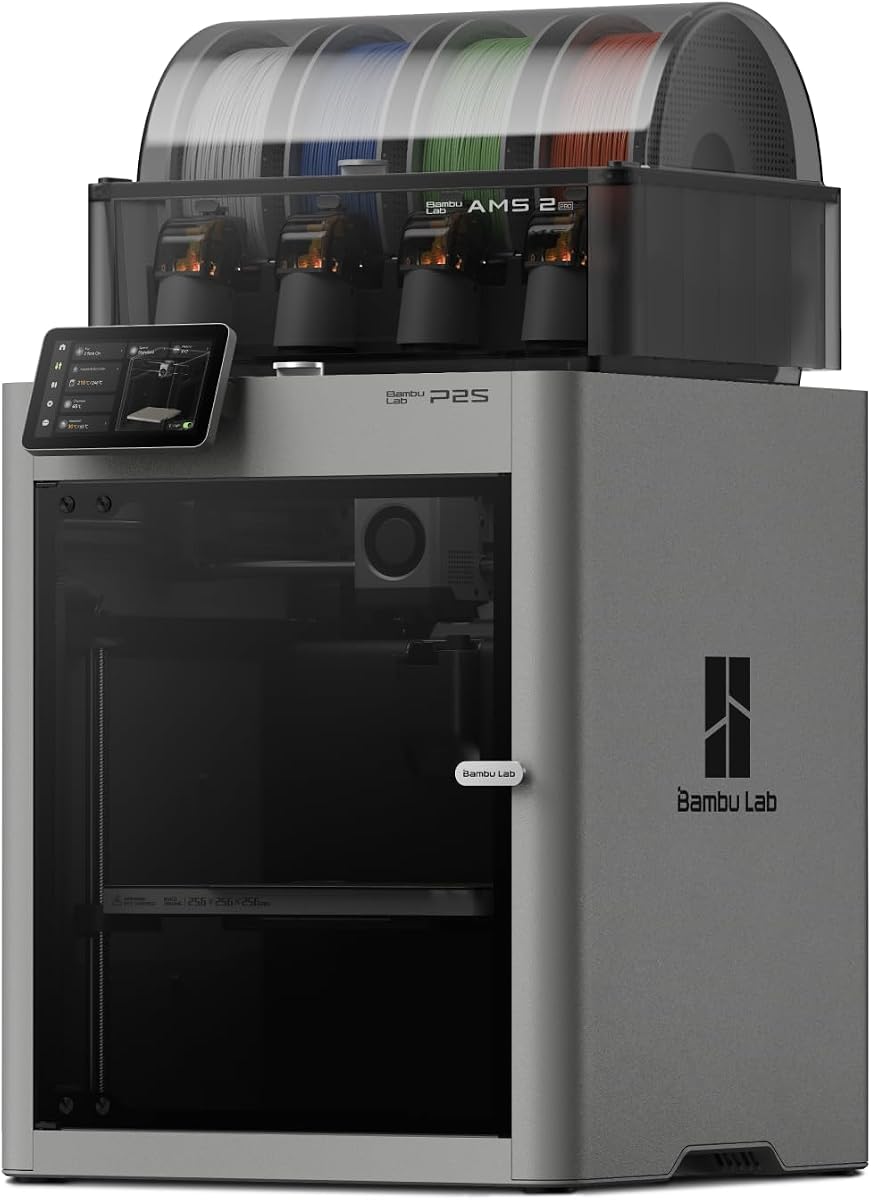
The Bambu Lab P2S Combo offers exceptional speed and accuracy for engineering prototypes on a budget. With the PMSM Servo Extruder and Active Flowrate Compensation every layer stays sharp and smooth delivering flawless corners consistently.
We may earn a commission when you buy through this link, at no additional cost to you.
Setup is effortless allowing you to start printing in just fifteen minutes. AI failure detection quick-swap nozzles and automatic calibration make professional-grade 3D printing accessible even for beginners needing reliable results quickly.
The AMS 2 Pro enables seamless multi-color printing with built-in filament drying up to sixty-five degrees Celsius. Adaptive Airflow System automatically balances cooling and heat retention keeping overhangs crisp or maintaining a fifty degree chamber for engineering materials.
This model is perfect for teams needing fast turnaround times without compromising on quality. Choose the P2S Combo if you require multi-color capabilities and high-speed precision for iterative design cycles.
The AMS 2 Pro keeps spools ready for flawless prints with built-in drying.
Adaptive airflow balances cooling and heat retention for diverse materials.
We may earn a commission when you buy through this link, at no additional cost to you.
The QIDI Max4 Combo offers a large industrial-grade build volume enabling you to print complex molds and custom prototypes in one go. Full-surface silicone heated bed ensures even temperature distribution preventing warping on large prints effectively.
We may earn a commission when you buy through this link, at no additional cost to you.
Closed-loop motors on X and Y axes achieve maximum printing speeds of eight hundred millimeters per second. The 2mm lead screw and anti-backlash nut on the Z axis reduce vertical gaps ensuring smooth and precise printing with excellent surface quality.
The high-flow hotend supports industrial-grade abrasive materials like carbon fiber-reinforced nylon alongside standard PLA and ABS. Smart monitoring features built-in AI camera detect abnormalities instantly saving materials and time during critical prototype runs.
Choose this printer if you need substantial build capacity for large mechanical parts. It balances speed and precision while offering expandable multi-color printing via the QIDI BOX for enhanced workflow flexibility.
Print large industrial parts without splitting models into segments.
Supports high-temperature materials like PC PPS-CF and ABS-CF.
We may earn a commission when you buy through this link, at no additional cost to you.
The Bambu Lab A1 delivers blazing-fast printing while maintaining exceptional accuracy and detail in prints. With acceleration up to ten thousand millimeters per second squared it excels at rapid prototyping without sacrificing precision for small parts.
We may earn a commission when you buy through this link, at no additional cost to you.
Full-auto calibration ensures optimal performance for every print handling Z-offset and bed-leveling automatically. Active Flow Rate Compensation actively compensates the flow rate according to readings ensuring flawless prints consistently.
The user-friendly interface and simplified touchscreen make it easy to use. Enjoy a quiet printing environment with active motor noise canceling allowing you to focus on your work while the printer brings ideas to life.
Ideal for beginners needing reliable quality quickly the A1 offers a seamless experience. Use it with the AMS lite for multi-color prints to expand design possibilities without complex setup procedures.
Say goodbye to manual calibration hassles with automatic performance tuning.
Algorithms compensate flow rate to ensure consistent smooth prints.
We may earn a commission when you buy through this link, at no additional cost to you.
The FLASHFORGE Creator 5 Pro is designed for industrial engineering with four independent toolheads and a seven-second FlashSwap changer. This eliminates massive purge waste drastically slashing operational overhead and material costs while achieving up to five times faster multi-color printing speeds.
We may earn a commission when you buy through this link, at no additional cost to you.
The fully enclosed frame features an active heated chamber up to sixty-five degrees Celsius to prevent warping in advanced filaments like ABS PC and PA. Built on an ultra-rigid integrated architecture combining CoreXY motion structure and precision linear rails it delivers rapid speeds without sacrificing accuracy.
Workspace safety is prioritized with dual HEPA 13 and activated carbon system effectively trapping ultrafine particles and fumes. Monitor real-time progress via the built-in HD chamber camera and exercise remote control through Flash Studio on desktop or mobile.
Choose this model if you need robust industrial parts without material waste. It offers more stability and control through automated calibration tools and dynamic flow calibration ensuring flawless first layers consistently.
Swapping nozzles without flushing filament eliminates massive purge waste.
Print confidently with advanced filaments like ABS PC and PA.
We may earn a commission when you buy through this link, at no additional cost to you.
The Bambu Lab P1S brings designs to life with vibrant multi-color capabilities when connected to the AMS system. With acceleration up to twenty thousand millimeters per second squared it delivers lightning-fast printing speed for focus on creating not waiting.
We may earn a commission when you buy through this link, at no additional cost to you.
A fully enclosed body improves print performance for advanced filaments like ABS and ASA. Automatic Bed Leveling makes 3D printing easy ensuring high-quality successful prints every time without manual adjustments needed.
Setup takes only fifteen minutes spending more time printing and less time setting up. The user-friendly design ensures a hassle-free assembly experience for all skill levels needing reliable performance for prototypes.
Ideal for those needing speed and reliability the P1S is a solid choice. Note that connecting the AMS is required for up to sixteen colors but the base machine supports ideal materials like PLA PETG and TPU well.
Fully enclosed body improves print performance for advanced filaments.
Two thousand millimeters per second squared acceleration for quick prototypes.
We may earn a commission when you buy through this link, at no additional cost to you.
The FLASHFORGE Adventurer 5M Pro reaches speeds up to six hundred millimeters per second powered by an all-metal CoreXY frame. Integrated vibration compensation algorithms eliminate ghosting and ringing for smooth high-precision surface finishes.
We may earn a commission when you buy through this link, at no additional cost to you.
Features a tool-free quick-release nozzle mechanism for effortless three-second replacements across multiple sizes. One-click full auto-leveling ensures precise bed calibration and a perfect first layer every time without manual intervention.
Built with an integrated dual filtration system and a fully enclosed chamber to ensure a clean printing environment and thermal stability. Powered by low-noise motion control it operates quietly under fifty decibels for seamless home office or classroom use.
Choose this printer if you need quick maintenance and high-speed precision. The high-temp extruder reliably prints engineering materials like ABS ASA and PETG-CF as well as standard PLA and PETG effectively.
Features tool-free nozzle mechanism for effortless replacements.
Ensures a clean printing environment and thermal stability.
We may earn a commission when you buy through this link, at no additional cost to you.
The Anycubic Kobra 3 Max Combo offers an industry-leading build volume of 420x420x500mm for life-size prototypes. Achieve professional-grade precision even at blazing 600mm/s speeds powered by G-sensor vibration compensation to eliminate layer shifts.
We may earn a commission when you buy through this link, at no additional cost to you.
Filament Runout Sensor ensures the machine pauses automatically when filament ends saving wasted material. Built-in resume function handles power outages for 24/7 reliability allowing uninterrupted printing for large engineering parts.
Dual-Sided PEI Spring Steel Plate ensures effortless print removal and 100% adhesion reliability. Swap nozzles instantly for PLA PETG and TPU filaments at high temps with the all-metal hotend rated to 300 degrees Celsius.
Ideal for engineers needing large capacity and speed the Kobra 3 Max Combo delivers. Use this model if you need to print multiple parts simultaneously or large furniture components.
Print life-size prototypes furniture components or multiple parts simultaneously.
Machine pauses automatically when filament ends to prevent waste.
We may earn a commission when you buy through this link, at no additional cost to you.
The FLASHFORGE Creator 5 Pro Industrial features an active chamber heating system maintaining stable temperature up to sixty-five degrees Celsius. This ensures consistent interlayer adhesion minimizing warping when printing high-performance materials like ABS ASA PC and Nylon.
We may earn a commission when you buy through this link, at no additional cost to you.
Experience a cleaner and safer printing environment with the advanced air system and HEPA13 internal recirculation filter. Achieve true multicolor printing without color mixing or cross-contamination using four completely independent toolheads.
The Pro handles high-throughput projects effortlessly with a blistering 600mm/s print speed. Rigid all-metal frame and CoreXY architecture ensure vibration-free precision. User experience is elevated with a 4-inch full-color touchscreen featuring an intuitive UI.
Choose this model for professional-grade results regardless of season or room temperature. Comprehensive sensor suite monitors for filament run-out to prevent failed prints ensuring total peace of mind during operation.
Break free from environmental limitations with stable 65C chamber.
Achieve true multicolor printing without color mixing.
We may earn a commission when you buy through this link, at no additional cost to you.
Selecting the right 3D printer for engineering prototypes involves balancing speed, build volume, and material capabilities. Use these key factors to match a machine with your specific development needs.
The build volume determines the maximum size of parts you can print in a single operation. For large prototypes or multiple parts, look for a volume exceeding 300mm in each dimension. Larger volumes reduce the need for splitting models which can weaken structural integrity during testing.
Ensure the machine fits your workspace while offering enough space for your largest project requirements.
A heated chamber is critical for engineering-grade materials like ABS, ASA, PC, and Nylon. It prevents warping by maintaining a stable ambient temperature around the print. Look for active heating systems that reach at least 50 degrees Celsius for reliable high-performance printing.
An enclosed design with heating ensures consistent interlayer adhesion regardless of room conditions.
Prototyping often requires combining different materials for support structures or color coding. Machines with multiple toolheads or advanced AMS systems allow seamless switching without manual swaps. This reduces waste and speeds up iterative testing cycles significantly.
Prioritize systems with independent extruders or fast tool changers for complex functional tests.
Higher print speeds accelerate your development cycle allowing more iterations in less time. Look for accelerations exceeding 10,000 mm/s2 to maintain accuracy at high speeds. However ensure speed does not compromise dimensional accuracy or surface finish.
Fast speeds are essential when time-to-market is a priority for your engineering team.
Check that the printer supports industrial-grade filaments like carbon fiber-reinforced nylon or PC. All-metal hotends capable of reaching 300 degrees Celsius expand your options beyond standard plastics. This flexibility is key for testing parts under real-world conditions.
Broad compatibility ensures you can prototype with materials close to final production specifications.
Engineering materials often emit fumes that require proper containment. Look for HEPA 13 filtration and activated carbon systems to capture ultrafine particles. Enclosed frames with continuous airflow maintain a safe workspace for team environments.
Proper filtration protects user health and ensures consistent print quality by preventing drafts.
A user-friendly slicing software and monitoring interface streamline your workflow. Automatic calibration features reduce setup time allowing more focus on design. Remote control capabilities enable you to manage prints without constant physical presence.
Integrated ecosystems improve efficiency by reducing manual steps between design and production.
Reliability is key for professional workflows. Check warranty terms and availability of customer support. Quick-swap nozzles and modular parts minimize downtime during maintenance. Consider brands with strong communities for troubleshooting advice.
Robust support ensures long-term productivity without frequent interruptions or costly repairs.
Start by calibrating the bed and ensuring the chamber is properly sealed. Use the printer software to upload your engineering models and adjust layer height for detail versus speed. Monitor the first few layers via the webcam or app to catch alignment issues early.
Keep the workspace clean by removing debris from the build plate after each job. Replace nozzles when you notice inconsistent extrusion or if you switch to abrasive materials frequently. Regularly clean the HEPA filters to maintain safe airflow and consistent printing conditions.
For long-term reliability store filaments in dry containers to prevent moisture absorption. Run maintenance checks like belt tensioning and lubrication as recommended by the manufacturer. Proper care ensures your printer remains accurate and dependable for future prototyping needs.
Yes several models feature heated chambers reaching 65 degrees Celsius which are essential for ABS and Nylon. Look for enclosed designs to prevent warping. Ensure the nozzle can handle high temperatures like 300 degrees Celsius for advanced materials.
Many models in this list support multi-color printing through tools like AMS systems or multiple toolheads. Check if you need a combo package to get these features. They allow seamless material transitions without manual filament swaps.
Build volumes range from 250mm to over 400mm per side depending on the model. Larger volumes allow printing full assemblies in one piece. Consider your largest part dimensions when choosing a printer.
Speed is critical for iterative design cycles. High speeds up to 600mm/s allow faster turnaround of test parts. Balance speed with accuracy features like vibration compensation to maintain precision.
Many models include HEPA filters and enclosed designs to contain fumes and dust. This makes them suitable for shared spaces. Check for safety certifications and ensure proper ventilation.
Regular maintenance includes cleaning the build plate and checking belt tension. Replace nozzles regularly especially when using abrasive filaments. Keep firmware updated to benefit from performance improvements.
We have reviewed ten top printers ranging from large-format multi-material machines to budget-friendly high-speed options. Each model offers unique features like tool changers or advanced filtration tailored for professional engineering needs.
Prioritize build volume and material compatibility based on your specific prototype requirements. If speed is key consider models with high acceleration and fast tool changers. If safety matters look for enclosed designs with HEPA filtration.
Always check current availability and warranty terms before purchasing. Prices and stock change frequently so verify details on the product pages. Choose the machine that best fits your workflow and budget constraints.