
EBOOT 30 Pieces Photoresistor
4.6Editor score
Thirty units in one pack
Standard five millimeter diameter
Ideal for bulk prototyping
This guide compares the top light sensor for Arduino options including photoresistors and digital modules for reliable ambient light detection in projects.
Light sensors are essential components for any maker working with Arduino to detect ambient conditions. They enable projects to respond to environmental changes automatically without user intervention. Choosing the right sensor ensures your automation projects function reliably and efficiently.
We analyzed ten highly rated products available online to find the best options for hobbyists. Our comparison looks at features like output types, compatibility, and build quality. This list covers everything from simple resistors to advanced digital modules.
Each pick shows key specs and what makes it suitable for different use cases. Prices fluctuate often so always check the current listing before buying. We hope this guide helps you select the perfect sensor for your next build.
4.6Editor score

4.5Editor score
5.0Editor score
The following table provides a side-by-side look at all ten products we reviewed. Each entry highlights the core specifications and key capabilities to help you decide quickly.



This module combines a photoresistor with an LM393 comparator for versatile light detection. It scores well for its dual output options and adjustable sensitivity. The build quality supports reliable performance in various environments.
We may earn a commission when you buy through this link, at no additional cost to you.
The integrated comparator provides a clean digital signal that simplifies coding. You can also access the analog voltage for more granular readings. The potentiometer allows precise tuning of the trip point.
Some users might find the board slightly larger than bare components. It also requires some wiring skills to connect properly. These are minor trade-offs for the convenience it offers.
It is ideal for makers who need both digital switching and analog data. We recommend it for general purpose automation projects requiring quick setup.
You get both digital and analog pins to fit any project need.
The onboard potentiometer lets you fine tune the trigger threshold easily.
We may earn a commission when you buy through this link, at no additional cost to you.
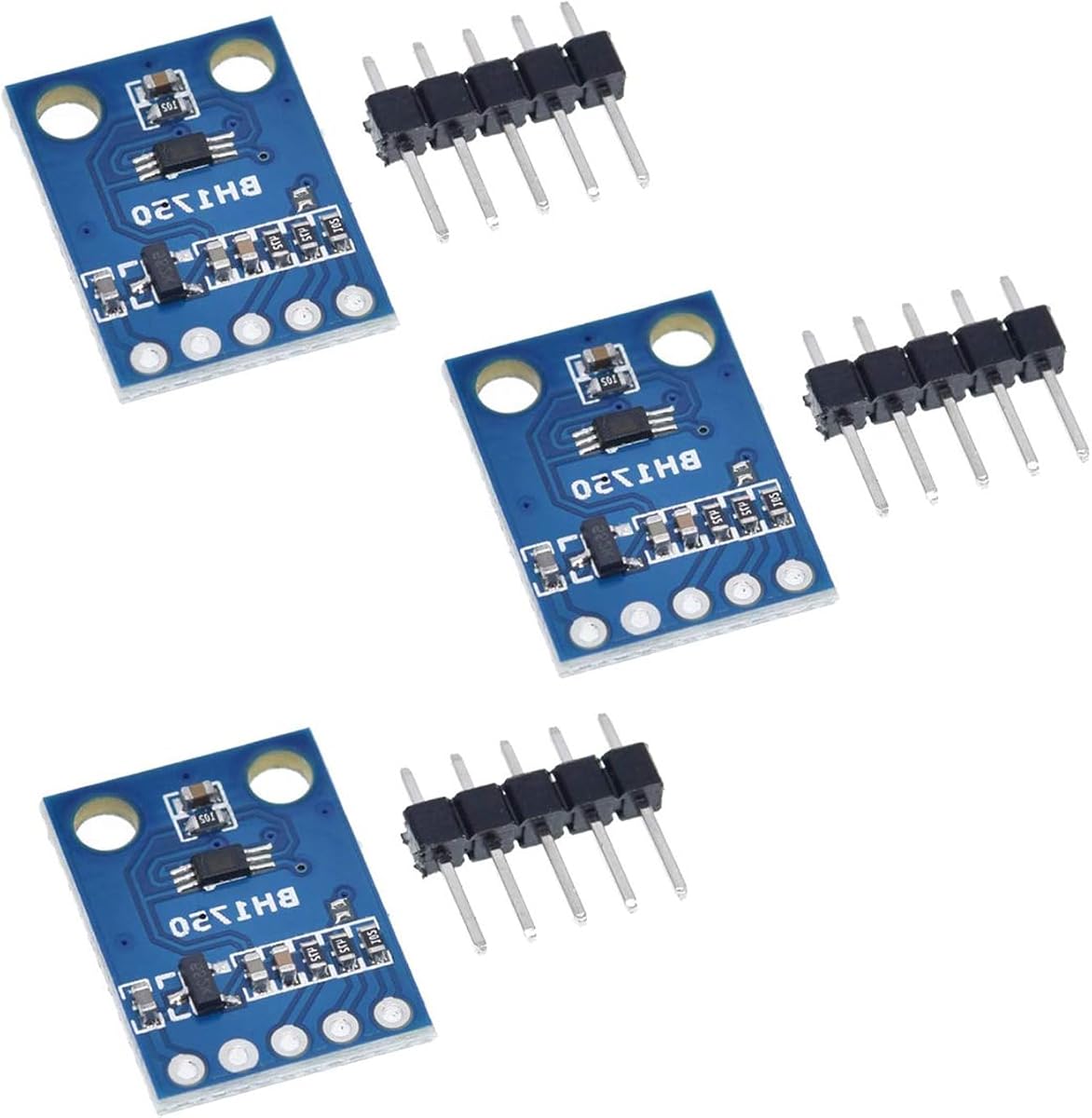
This three pack features the GY-302 module with a BH1750FVI chip for accurate readings. It ranks high for precision and compact size. It is perfect for projects needing space efficient light monitoring.
We may earn a commission when you buy through this link, at no additional cost to you.
The ROHM chip delivers high quality data across a wide range. The module fits easily on breadboards or custom PCBs. Power supply flexibility makes it work with most boards.
It lacks analog output which might limit some users. The I2C interface also requires specific library support. These factors are standard for digital sensors though.
We suggest this for advanced users needing precise lux data. It is a top choice for environmental monitoring or automated lighting control.
The BH1750FVI ensures accurate digital measurements for professional results.
Its tiny dimensions free up valuable space on your main board.
We may earn a commission when you buy through this link, at no additional cost to you.
HiLetgo offers a solid three pack of GY-302 modules using authentic ROHM chips. It earns recognition for consistent performance and quality. This is a robust choice for production prototypes.
We may earn a commission when you buy through this link, at no additional cost to you.
The original chip ensures stable readings over time. The compact design allows dense packing on larger assemblies. It works seamlessly with standard Arduino libraries.
Cost per unit is slightly higher than generic options. The digital-only nature may limit analog users. These are acceptable for the reliability provided.
This is recommended for critical projects needing consistent data. It stands out for industrial or long term monitoring applications.
Using original ROHM parts ensures higher reliability and precision.
The small form factor saves space on complex circuit boards.
We may earn a commission when you buy through this link, at no additional cost to you.
This ten pack offers photodiode modules with directional sensing capabilities. It ranks high for projects needing specific light source tracking. The dual output design adds flexibility.
We may earn a commission when you buy through this link, at no additional cost to you.
Directionality ensures the sensor reacts only to light from the front. This reduces interference from ambient or side sources. The adjustable potentiometer helps tune sensitivity.
Precision aiming is required during installation to work well. It needs mounting hardware which adds assembly steps. These are typical for directional sensors.
We recommend this for light seeking robots or tracking systems. It provides excellent value for bulk directional detection needs.
Senses light from a fixed direction to reduce false triggers.
Ten modules allow multiple installations or team sharing.
We may earn a commission when you buy through this link, at no additional cost to you.
EBOOT provides thirty standard photoresistors ideal for prototyping. It claims the budget top spot for its sheer quantity. These are perfect for classrooms or large batch testing.
We may earn a commission when you buy through this link, at no additional cost to you.
Thirty units offer ample replacements and spare parts. The GM5539 type is a standard for hobby projects. High voltage tolerance ensures robustness.
It lacks a circuit board so soldering is required. Users must design their own voltage dividers. This adds complexity compared to modules.
This is the go-to for bulk supply and basic builds. It is unmatched for value and quantity in the market.
Thirty resistors mean you never run out during projects.
Design your own circuits without being locked to module specs.
We may earn a commission when you buy through this link, at no additional cost to you.
This ten pack focuses on digital light detection using LM393. It is excellent for on-off light automation tasks. The direct relay drive is a key advantage.
We may earn a commission when you buy through this link, at no additional cost to you.
The module outputs digital levels when thresholds are crossed. This simplifies logic for basic switching. It connects easily to microcontrollers.
Analog data is not available here. You lose granular light level details. This is fine for simple control needs.
We recommend this for light operated switches and alarms. It is a practical solution for automated trigger scenarios.
Output can drive relays directly for switching appliances.
Buy once and get enough for multiple project trials.
We may earn a commission when you buy through this link, at no additional cost to you.
This kit comes with four modules and tutorials for setup. It helps beginners get started with digital sensing. The dual output supports flexible use.
We may earn a commission when you buy through this link, at no additional cost to you.
The included tutorials guide you through connections and code. Adjustable sensitivity makes it easy to tune. It works on 3.3V and 5V systems.
It offers fewer units than larger packs. You may need to buy more for multiple uses. Still, the educational aspect adds value.
We suggest this for new users needing guidance. It is a great starting point for light sensor projects.
Step-by-step tutorials make setup and wiring much easier.
Works seamlessly with both 3.3V and 5V boards.
We may earn a commission when you buy through this link, at no additional cost to you.
This is a massive pack of fifty GL5516 photoresistors. It ranks high for bulk value and stockpiling. It is perfect for large scale projects or sharing.
We may earn a commission when you buy through this link, at no additional cost to you.
The GL5516 part is a standard for light sensing. With fifty units, you can distribute them widely. It is great for solar tracking arrays.
It requires external circuit design for voltage dividers. No boards or soldering help are included. This is standard for components.
We recommend this for makers needing many sensors at once. It is the top pick for sheer volume.
Fifty resistors allow bulk deployment without reordering.
Ideal for solar tracking projects needing multiple sensors.
We may earn a commission when you buy through this link, at no additional cost to you.
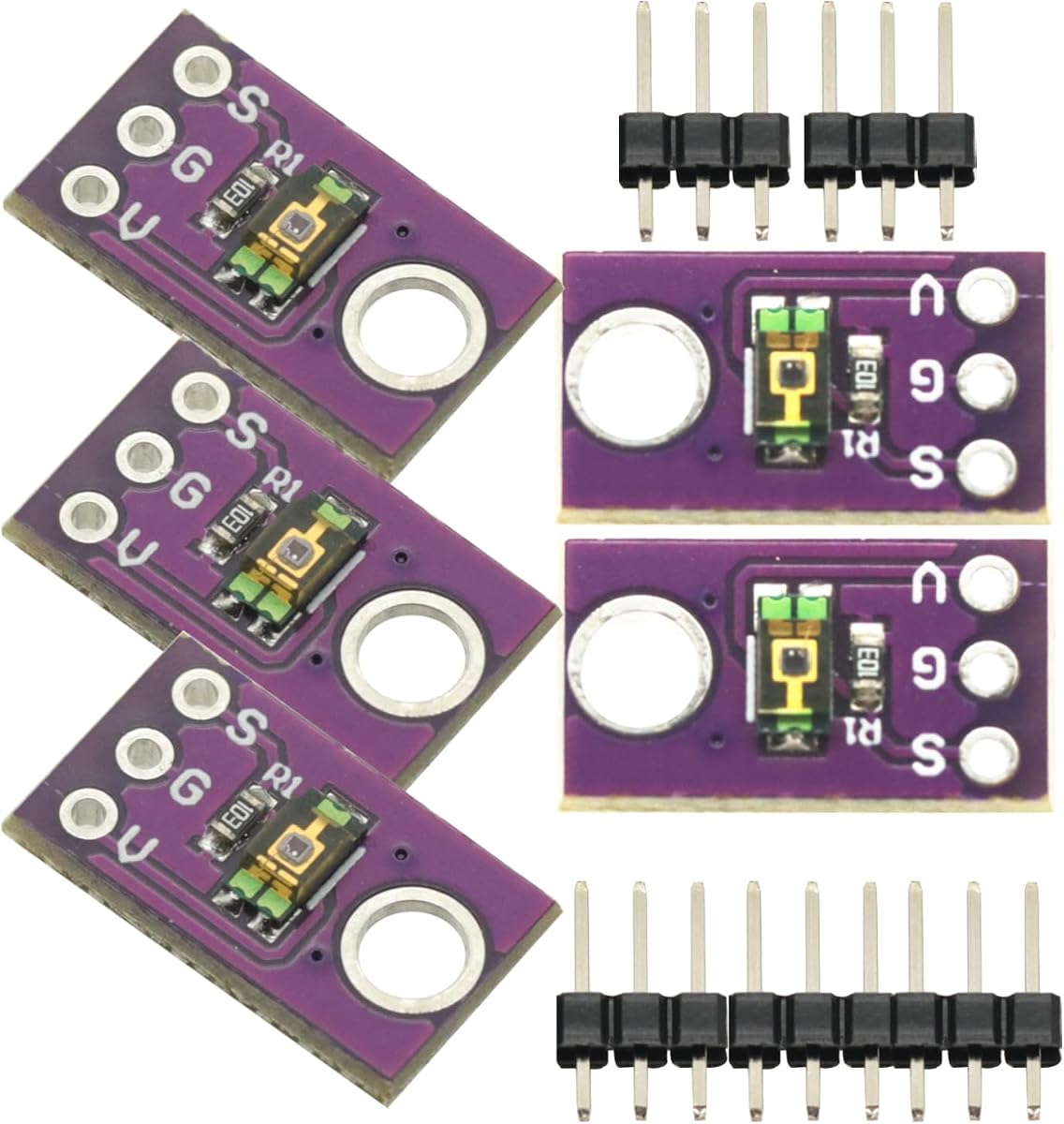
This premium pack features TEMT6000 chips perfect for displays. It earns the top rating for professional performance. Use it for screen dimming and industrial controls.
We may earn a commission when you buy through this link, at no additional cost to you.
The spectral response matches human eye perception better. It is designed for precise brightness adjustment. Five pieces cover small batch needs.
It costs more per unit than basic sensors. It is specialized for display and keypad tasks. This limits general hobby use.
We recommend this for commercial and display projects. It is the premium choice for accurate ambient sensing.
Designed to dim displays accurately without flicker.
High grade spectral accuracy for reliable results.
We may earn a commission when you buy through this link, at no additional cost to you.
uxcell offers three modules with a stable LM393 comparator. It is well suited for vehicle detection projects. The dual output supports flexible needs.
We may earn a commission when you buy through this link, at no additional cost to you.
The wide voltage range ensures stability across systems. It delivers clean signals for both logic and reading. Three units are good for small trials.
Quantity is limited compared to bulk options. It is less than some larger packs. This works for personal hobby use.
We recommend this for automotive and specific detection tasks. It is reliable for basic sensor integration.
Wide voltage tolerance ensures stable performance across conditions.
Digital and analog outputs give maximum flexibility.
We may earn a commission when you buy through this link, at no additional cost to you.
Choosing the right sensor depends on your specific needs. Consider these factors to find the best fit for your project.
Modules offer digital only digital and analog or analog only. Digital is for simple thresholds. Analog gives granular light data for advanced logic. Choose based on your project complexity.
Select digital for simple on or off and or analog for variable control needs.
Photoresistors are cheap and basic. Photodiodes and digital chips like BH1750 offer higher accuracy. Professional parts like TEMT6000 match human perception. Match technology to application requirements.
Choose advanced chips for precision and resistors for cost efficiency.
Ensure the module matches your board voltage. Most work with 3.3V and 5V but some are fixed. Check specs to avoid damage or logic errors. Compatibility saves troubleshooting time.
Always verify voltage specs before connecting to your microcontroller.
Modules are larger than bare components. Compact modules like GY-302 save space. Consider your available PCB area or breadboard size. Size impacts assembly complexity.
Pick a module size that fits your physical space limits.
Bulk packs of resistors offer low unit cost. Modules come in smaller batches. Buy enough to avoid mid project shortages. Quantity affects long term budgeting.
Estimate your needs and buy slightly more than required.
Adjustable modules let you tune trip points. Fixed sensors are simpler but less flexible. Consider your environment's light levels when choosing. Tuning helps avoid false triggers.
Adjustable sensitivity provides better control in variable lighting.
Some modules sense all ambient light. Others like photodiodes sense direction. Use directional sensors for tracking or specific source detection. Non-directional work for general room lighting.
Choose directional sensing for specific source tracking tasks.
Professional parts like ROHM chips ensure reliability. Generic modules may vary. Check seller ratings and chip authenticity. Quality impacts long term project success.
Invest in branded parts for critical projects.
Connect the sensor to your microcontroller following the wiring guide. Secure pins to the correct ports like analog or digital inputs. Test basic output values with a serial monitor.
Secure the module with mounting brackets or adhesive to prevent movement. Exposure to extreme temperatures may affect readings. Keep away from direct heat sources.
Use libraries like Adafruit BH1750 for digital modules. Simple code reads thresholds for photoresistors. Check datasheets for pinout details.
A photoresistor changes resistance with light and needs a voltage divider. A digital light sensor outputs direct digital signals often via I2C. Digital sensors are more accurate and easier to use.
The TEMT6000 is designed for backlight dimming as it matches human eye response. It provides precise spectral data for smooth brightness adjustments in displays and keypads.
Modules like GY-302 usually come with headers ready for breadboards. Bare resistors require soldering to wires or PCBs. Choose based on your soldering experience and project needs.
Most modules support 3.3V to 5V power ranges. Always check the voltage specs on the product page. Some older models may need level shifters for 3.3V.
Modules with potentiometers allow manual tuning by rotating the blue screw. This sets the trip point for digital outputs. Some digital sensors use code to set thresholds instead.
Bulk photoresistor packs are the most cost effective for large builds. They allow distribution across many units cheaply. Modules offer convenience but cost more per unit.
The top picks include the HiLetgo GY-302 for precision and the EBOOT resistors for bulk value. Each option serves different project scales and complexity levels.
Prioritize accuracy for advanced displays or simplicity for basic triggers. Match the sensor type to your voltage and board limits.
Check current listings for stock and availability before buying. Prices and availability change often so verify details.