
Proster LCR Meter Multimeter Capacitance Inductance Resistance Tester
4.5Editor score
Affordable entry level option
Rotatable LCD display
Includes storage bag kit
This guide compares the top ten Lcr Meter options for electronics work, detailing their precision, features, and suitability for hobbyists and professionals.
An Lcr Meter is an essential tool for anyone working with electronic components. It measures inductance, capacitance, and resistance with high precision. Finding the right one ensures accurate diagnostics and efficient troubleshooting in your projects.
We evaluated ten top-rated Lcr Meters based on accuracy, features, and ease of use. Our analysis covers handheld units, benchtop models, and specialized testers to help you find the perfect fit for your needs.
Each pick below highlights key specs, pros, and cons to guide your decision. Note that prices and availability may change, so always check the latest details before purchasing your next Lcr Meter.
4.5Editor score

4.7Editor score

4.4Editor score
This side-by-side comparison outlines the core specifications and capabilities of each Lcr Meter on our list. Use this table to quickly identify which model matches your required measurement range and connectivity needs.



The FNIRSI LC1020E is a robust handheld Lcr Meter designed for precision electronics work. It holds a strong rating due to its dual parameter display and high count resolution, making it a top choice for detailed component analysis.
We may earn a commission when you buy through this link, at no additional cost to you.
Its standout feature is the ability to show main and secondary parameters simultaneously, such as X, D, Q, and ESR. The smart sorting mode helps technicians quickly sort batches of components by preset tolerance values with visual and audible alerts.
While highly capable, users must perform open and short calibration before each use to ensure accuracy. Additionally, the battery life may require frequent recharging during heavy all-day usage sessions without a backup power source.
This meter is ideal for repair shops and advanced hobbyists who need reliable data without breaking the bank. Its balance of features and performance makes it the editor's choice for most users seeking a versatile Lcr Meter.
Seeing primary and secondary values at once streamlines troubleshooting by reducing screen switching during complex diagnostics.
Preset tolerance checks with alarms speed up production testing and ensure quality control for component batches.
We may earn a commission when you buy through this link, at no additional cost to you.
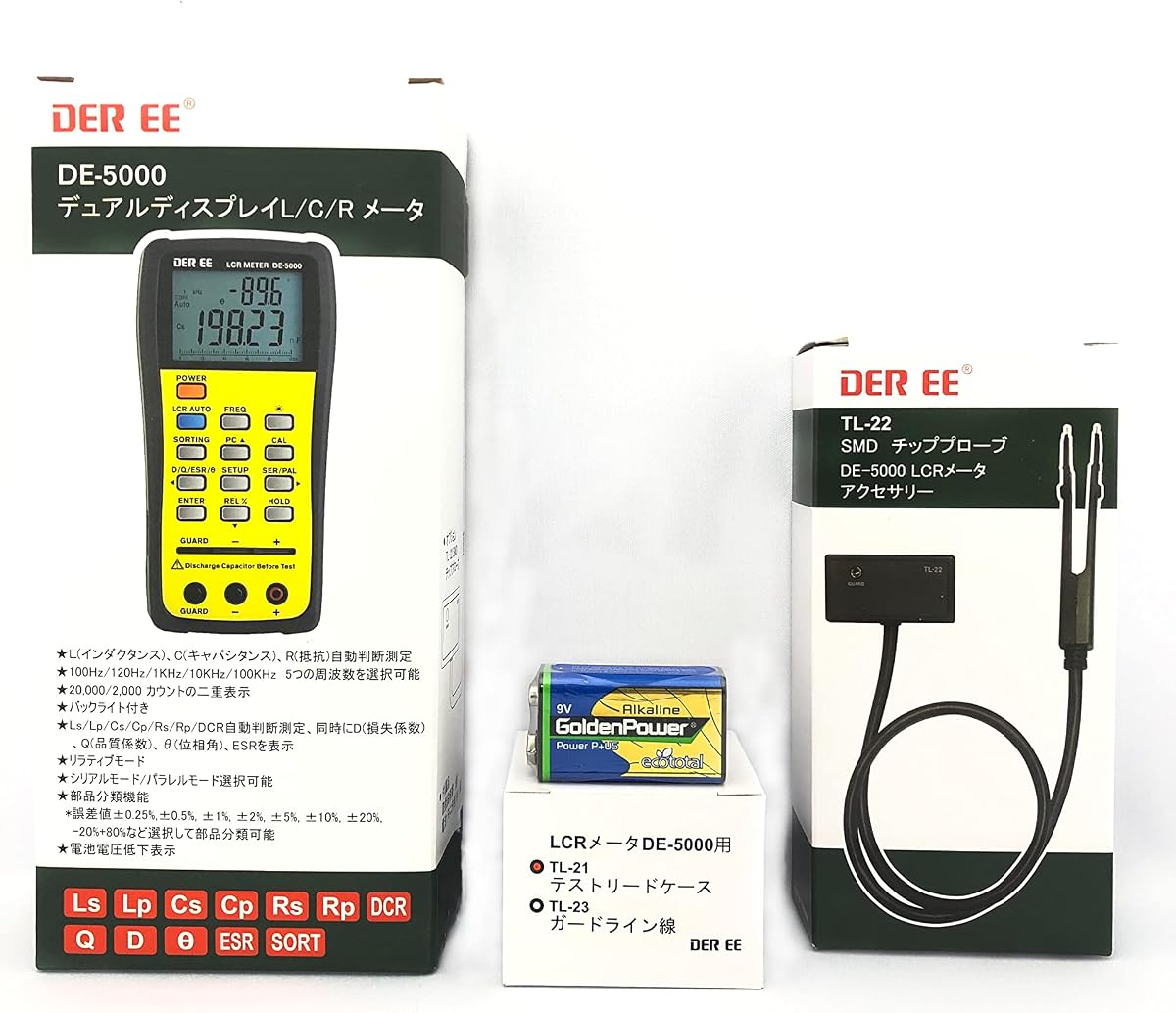
The DE-5000 is a well-established handheld Lcr Meter known for its reliability and auto-ranging capabilities. It offers a straightforward experience for measuring inductance, capacitance, and resistance with secondary parameters like D and Q.
We may earn a commission when you buy through this link, at no additional cost to you.
Its auto-ranging feature allows users to measure components directly without selecting specific functions, which speeds up workflow. The inclusion of alligator leads, SMD tweezers, and a guard line makes it a complete kit right out of the box.
One limitation is its weight compared to lighter competitors, which might be noticeable during prolonged field use. Also, base models may lack backlighting, making reading difficult in low-light environments without additional lighting.
This model suits field technicians and repair professionals who value ease of use and complete accessory kits. Its proven track record and comprehensive features make it a strong contender in the handheld Lcr Meter category.
Automatic function selection removes manual steps, allowing faster testing of unknown components during repairs.
Included leads and tools ensure you can test various component types immediately without buying extras.
We may earn a commission when you buy through this link, at no additional cost to you.
The MATRIX MCR5200 is a high-end benchtop Lcr Meter designed for labs and R&D environments. Its 0.1 percent basic accuracy and 41 frequency points provide the precision needed for critical component verification and production quality control.
We may earn a commission when you buy through this link, at no additional cost to you.
With USB and RS232C connectivity, this meter allows seamless data transfer to a PC for analysis and storage. The large 4.3 inch TFT display ensures clear visibility of complex measurement data during long testing sessions.
Because it is a benchtop unit, it requires permanent space on a workbench and is not portable like handheld models. It also consumes more power, necessitating a constant connection to an AC outlet during use.
This Lcr Meter is best suited for laboratories and production lines where accuracy and data logging are paramount. Its advanced features and robust build justify the premium investment for professional engineering applications.
Precise 0.1 percent readings ensure reliable validation of components in high-stakes research and development.
USB and serial ports enable automated data logging and integration with existing testing workflows.
We may earn a commission when you buy through this link, at no additional cost to you.
The De-5000 High Accuracy set offers a comprehensive solution for electronics testing with ISO 9001 certification. It includes specialized leads for SMD components, making it a robust choice for professionals needing verified accuracy and versatility in their measurements.
We may earn a commission when you buy through this link, at no additional cost to you.
The display provides 20,000 counts for high resolution reading, and the meter supports both series and parallel measurement modes. Users can select specific tolerance levels to verify components against precise standards efficiently.
The inclusion of a protective carrying case adds value but increases the overall cost compared to bare models. Also, setting up the various test modes might require a brief learning curve for new users.
This set is perfect for technicians who require certified reliability and a complete toolkit for various component types. Its high count display and flexible settings make it a valuable asset for demanding repair tasks.
ISO 9001 certification ensures the device meets international quality management standards for consistent performance.
Included tweezers enable direct testing of surface mount devices without needing separate adapters.
We may earn a commission when you buy through this link, at no additional cost to you.
The Proster LCR Meter is an excellent entry-level option for hobbyists and students. It provides essential measurement capabilities for inductance, capacitance, and resistance at a fraction of the cost of professional units.
We may earn a commission when you buy through this link, at no additional cost to you.
Its rotatable LCD screen allows for comfortable reading from different angles without moving the device. The zero adjustment feature helps eliminate stray capacitance errors, ensuring more accurate readings for small components.
The lower 1999 count display and slower sampling rate mean it is not ideal for high-speed production testing. However, for most hobby projects and basic repairs, these limitations are negligible compared to the cost savings.
This meter is highly recommended for beginners or those on a tight budget who still need reliable component testing. Its user-friendly design and included accessories make it a smart starting point for electronics enthusiasts.
Adjustable screen angles improve ergonomics when working on benches or in awkward positions.
Low entry cost opens up component testing capabilities to students and casual hobbyists.
We may earn a commission when you buy through this link, at no additional cost to you.
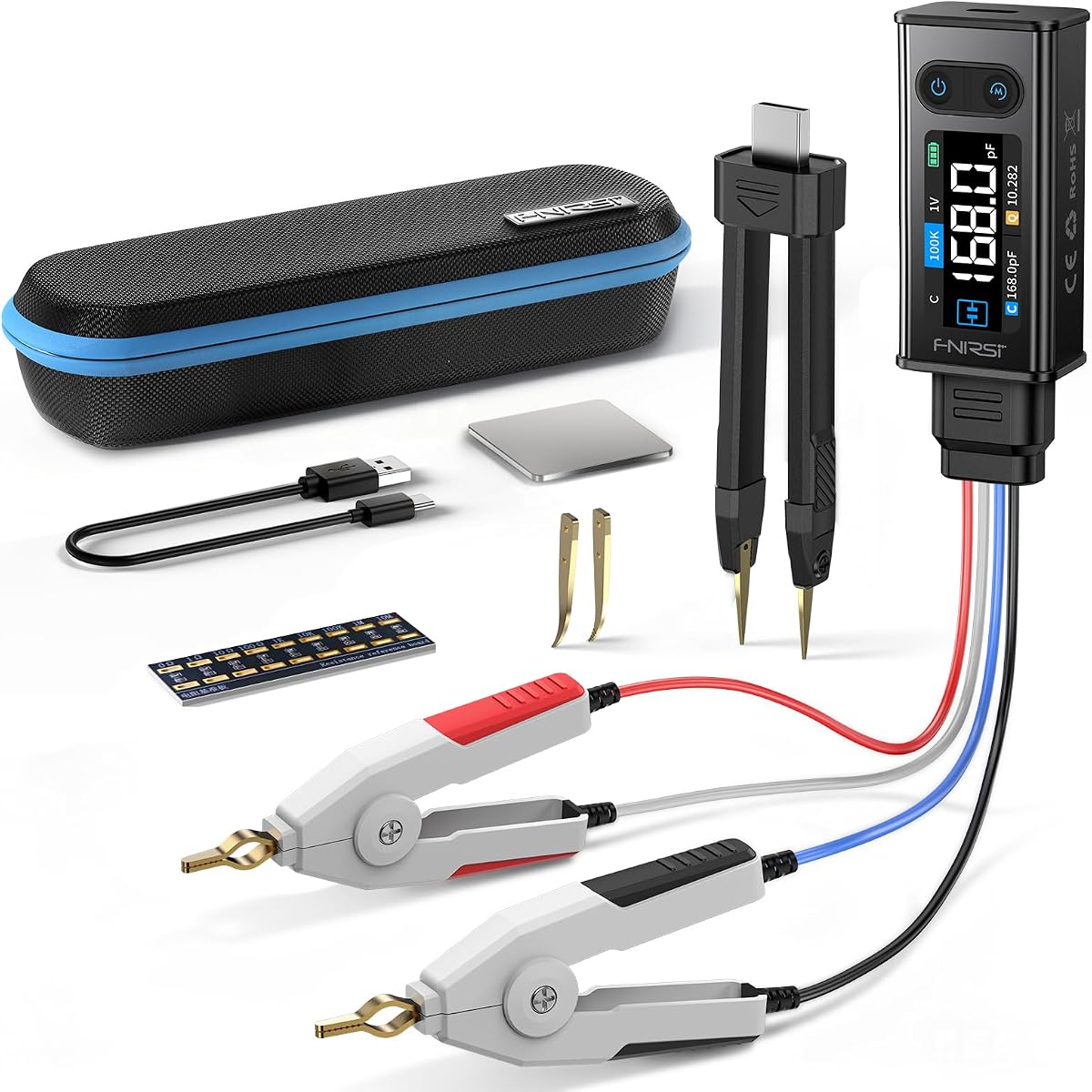
The FNIRSI LCR-ST2 is a compact Lcr Meter designed specifically for SMD and through-hole testing with integrated tweezers. Its portable form factor and magnetic mounting make it convenient for bench work and quick checks.
We may earn a commission when you buy through this link, at no additional cost to you.
Features like auto sorting and multiple test voltage levels allow for versatile analysis of components. The rechargeable battery via Type-C ensures you stay powered up without needing disposable cells.
The small 1.47 inch display might be hard to read for some users, especially in dim light. Also, limited manual controls restrict detailed configuration compared to larger units.
This tool is best for technicians who need a lightweight solution for frequent component checks. Its integrated design reduces setup time and enhances portability for on-the-go electronics work.
Built-in tweezers streamline SMD testing by eliminating the need for external probes or clips.
Rear magnets secure the device to metal surfaces, freeing hands for component placement.
We may earn a commission when you buy through this link, at no additional cost to you.
The Peak Atlas LCR45 is known for its impressive 4.8 rating among users, offering solid performance for impedance and LCR measurements. It supports high frequency testing up to 200kHz, which is valuable for RF applications.
We may earn a commission when you buy through this link, at no additional cost to you.
With enhanced resolution down to 0.2 microhenries and picofarads, this meter can detect minute component values. The one-year warranty adds peace of mind for buyers investing in this specialized device.
Manual frequency selection can be a hurdle for users seeking fully automatic operation. Additionally, the display lacks advanced features seen in color screens, focusing instead on core measurement accuracy.
This meter is best for users focused on impedance analysis and RF work. Its high accuracy and strong warranty make it a reliable choice for professional and serious hobbyist applications.
Support for up to 200kHz testing ensures accurate measurements for high-speed and RF circuits.
Fine resolution steps allow detection of very small component deviations for precision work.
We may earn a commission when you buy through this link, at no additional cost to you.
The B&K Precision 879B is a deluxe universal Lcr Meter featuring a dual display and backlit screen for clarity. It is designed for general-purpose measurements with a focus on readability and ease of use.
We may earn a commission when you buy through this link, at no additional cost to you.
The backlit display allows for work in dark conditions, and the included AC adapter provides reliable power beyond battery life. Its dual display shows primary and secondary parameters clearly.
While lightweight, its dimensions might be considered bulky compared to some newer compact models. Also, it lacks the extensive frequency options found in higher-end competitors.
This model suits general technicians who prioritize display quality and power flexibility. Its universal measurement capabilities and backlight make it a practical choice for field service.
Illuminated screen ensures clear reading in low-light environments without external light sources.
Simultaneous display of multiple values reduces the need to toggle between screens.
We may earn a commission when you buy through this link, at no additional cost to you.
The Extech LCR200 is a dedicated passive component Lcr Meter known for its built-in test fixture and practical features. It supports limit settings for sorting components, which is useful for quality control tasks.
We may earn a commission when you buy through this link, at no additional cost to you.
Its open and short calibration function ensures accuracy by eliminating stray impedance. The auto power-off feature conserves battery life during periods of inactivity.
The device uses fixed test frequencies which might limit flexibility compared to adjustable models. Its design is functional but older than some modern competitors.
This meter is ideal for production environments needing simple sorting and reliable calibration. Its dedicated passive testing features make it a solid option for consistent component verification.
Integrated fixture streamlines testing by removing the need for external test leads.
Set pass/fail limits to quickly sort components during high-volume testing tasks.
We may earn a commission when you buy through this link, at no additional cost to you.
The Pro1-100KHz Lcr Meter boasts a perfect 5.0 rating and offers high accuracy of 0.1 percent for resistance and capacitance. It includes smart SMD tweezers, enhancing its versatility for modern electronics repair.
We may earn a commission when you buy through this link, at no additional cost to you.
Its wide measurement range covers many component types, and the three test voltages allow for flexible testing conditions. The inclusion of diode testing adds extra functionality beyond basic LCR measurements.
Documentation may be sparse, which can make setup challenging for first-time users. The price point reflects its high accuracy and premium features.
This meter is best for users who demand top-tier accuracy and SMD capabilities. Its strong ratings and comprehensive features make it a standout choice for advanced testing.
0.1 percent accuracy ensures reliable results for critical component analysis and diagnostics.
Smart tweezers simplify the testing of surface mount components directly.
We may earn a commission when you buy through this link, at no additional cost to you.
Selecting the right Lcr Meter depends on your specific needs, budget, and environment. This guide breaks down the key factors to consider.
Accuracy determines how close your readings are to the true value. For professional or production work, aim for 0.1 percent accuracy. Hobbyists might find 1 percent sufficient for most tasks.
Prioritize accuracy based on the tolerance levels of components you typically test.
Different components perform best at specific frequencies. Ensure the meter supports frequencies relevant to your work, such as 100kHz for switching power supplies.
A wider range offers flexibility for testing various inductors and capacitors.
A clear, backlit display helps you read values in any lighting. Color TFT screens provide more information at once compared to monochrome LCDs.
Look for displays with adjustable brightness and readable fonts.
Handheld units are great for fieldwork, while benchtop models offer higher stability and power. Decide where most of your testing takes place.
Choose handheld for mobility and benchtop for lab environments.
Modern meters may offer USB or RS232C ports for saving data to a computer. This is essential for detailed analysis and logging.
Check if data saving features match your reporting needs.
Quality test leads and SMD tweezers are crucial. Some kits include these; others charge extra. Ensure compatibility with your component types.
Verify that necessary accessories are included or easily obtainable.
Battery life and rechargeability impact usability. USB rechargeable batteries are convenient but may not last as long as alkalines.
Consider power efficiency if you work for long periods.
Open and short calibration are standard features. Models that make this process simple ensure better accuracy over time.
Check for automatic calibration aids or clear manual instructions.
Always perform open and short calibration before starting any measurements. This ensures the meter accounts for lead resistance and stray capacitance.
Keep the test leads and probe tips clean to maintain accuracy. Store them in a protective case when not in use to prevent damage.
Avoid testing components on live circuits to prevent damage to the meter. Discharge capacitors fully before connecting them to the device for safety.
An Lcr Meter is used to measure the values of inductors, capacitors, and resistors. It provides detailed secondary parameters like quality factor and ESR which are essential for circuit analysis.
Calibration typically involves connecting open leads and then shorted leads to the meter and following the on-screen instructions. This process zeroed out the instrument for accurate measurements.
It is generally recommended to remove components before measuring to ensure accuracy. Measuring in-circuit can be affected by surrounding components and power.
Series mode assumes the component is connected in series with the source, while parallel assumes it is in parallel. Choose the mode that matches your circuit topology for accurate readings.
Most handheld models use standard AA or 9V batteries while some newer models have built-in rechargeable ones. Benchtop units usually plug into AC power directly.
Accuracy ensures that you know the true value of a component. This is critical for designing reliable circuits and troubleshooting failures effectively.
Choosing the best Lcr Meter involves balancing accuracy, features, and budget. Whether you need a portable tool or a benchtop precision unit, our top picks offer reliable options.
Prioritize accuracy and connectivity if you work in a lab or production setting. For hobbyists, ease of use and affordability should guide your decision.
Always check current availability and pricing before purchasing to ensure you get the best value for your investment.