
400 Watt Solar Panels 12V 18BB N-Type
4.4Editor score
Up to 25% efficiency
IP68 waterproof certification
Enhanced MC4 connectors
This guide compares the top 400 Watt Solar Panels for Rvs available in October 2026, evaluating efficiency, durability, and real-world performance for campers.
Choosing the right solar power setup is crucial for modern RV enthusiasts seeking independence. High wattage panels like 400W models provide substantial energy for appliances and devices. They ensure you remain self-sufficient even during extended off-grid adventures without relying on shore power or noisy generators.
We have carefully evaluated the market to identify the most reliable 400 Watt Solar Panels for Rvs. Our analysis focuses on conversion efficiency, build quality, and compatibility with existing systems. Each product was selected based on user feedback and technical specifications to ensure you make an informed decision for your vehicle.
Every pick in this list highlights specific strengths such as bifacial technology or portability. Prices and availability can change frequently so always verify details before purchasing. These panels represent the current state of portable solar technology designed to keep your mobile lifestyle powered efficiently.
4.4Editor score

4.8Editor score
4.5Editor score
This side-by-side comparison details the key specifications and strengths of the top ten 400 Watt Solar Panels for Rvs. Use this table to quickly identify which model fits your specific power needs and installation constraints.



This Callsun panel stands out as the top performer in our selection with its exceptional 25.6% conversion efficiency. Users rate it highly for its ability to generate power even under partial shading conditions due to its unique twin cell design. It represents the pinnacle of current solar technology for RV roof installations.
We may earn a commission when you buy through this link, at no additional cost to you.
The bifacial technology allows the panel to capture reflected light from the RV roof surface. This can boost total output by up to thirty percent compared to standard monofacial panels. The N-type cells are more resistant to heat degradation than traditional P-type cells ensuring consistent output on hot summer days.
While the performance is impressive the cost is higher than average fixed panels. You also need to consider roof mounting height to ensure enough reflection reaches the back side. These trade-offs are acceptable for those who prioritize maximum energy generation per square foot of space.
RV owners seeking the most reliable long-term power solution will find this panel ideal. It is perfect for those who camp in varied weather conditions and need consistent power. We recommend this for serious off-grid enthusiasts who want to maximize their battery charging potential.
The bifacial design captures light from both sides boosting overall system efficiency significantly.
TwinCell technology splits the panel so partial shading does not shut down the whole array.
We may earn a commission when you buy through this link, at no additional cost to you.
This model offers incredible value by providing high-end N-type technology at a budget-friendly price point. With a 25% efficiency rating it competes with much more expensive panels on the market. Customers appreciate the quality of the copper wiring and the robust IP68 junction box protection.
We may earn a commission when you buy through this link, at no additional cost to you.
The 18BB silver-containing full welding busbars improve electric performance and reduce hot spots effectively. This construction ensures that the panel operates efficiently even when temperatures rise significantly. The Grade A+ cells are rigorously tested for quality before shipping to ensure longevity.
The cables provided are 11 AWG which is thicker than standard and reduces resistance losses. However the leads are not as long as some other brands might offer which could require extensions. These minor issues do not detract from the overall high performance and durability of the unit.
Buyers looking for a cost-effective way to upgrade their solar setup should consider this option. It is ideal for those on a tight budget who refuse to compromise on cell efficiency. We suggest this for DIY installers who want professional results without paying premium brand prices.
Uses premium oxygen-free copper wires to minimize resistance and maximize power transmission efficiency.
IP68 rated junction box prevents moisture ingress ensuring reliability in rainy or dusty conditions.
We may earn a commission when you buy through this link, at no additional cost to you.
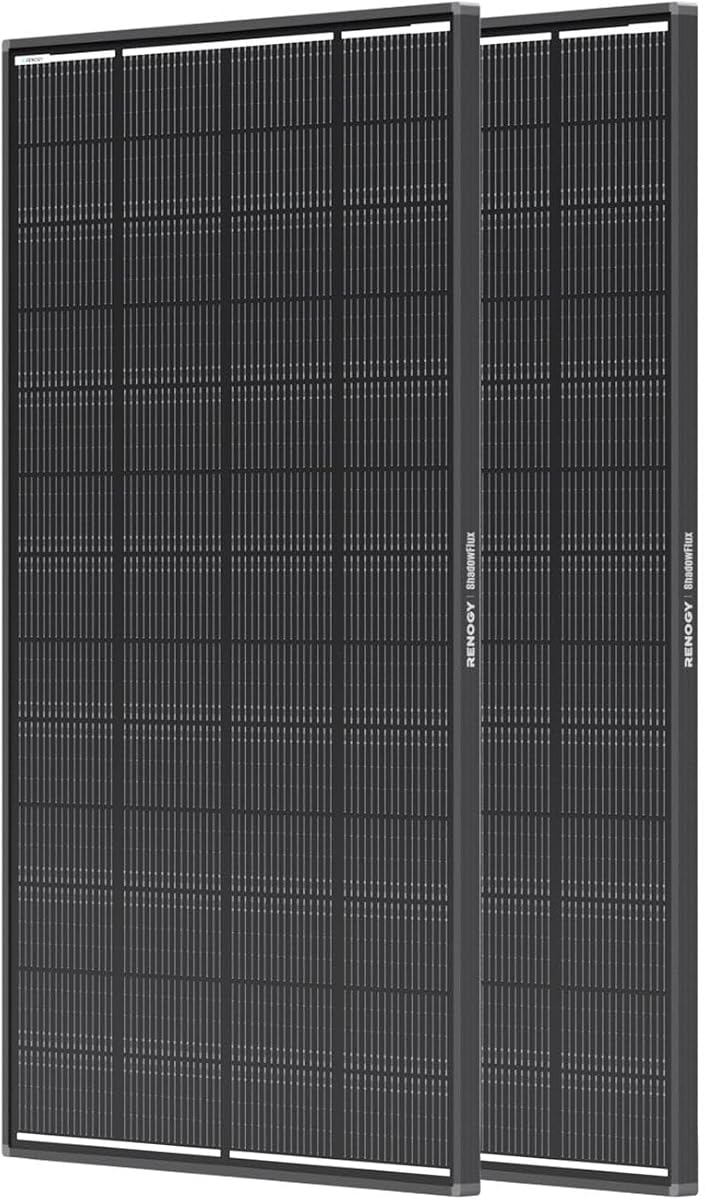
Renogy continues to lead the RV solar industry with this advanced ShadowFlux panel featuring 25% efficiency. The proprietary anti-shading technology ensures you get power even when trees or vents cast shadows on the roof. It is slightly smaller and lighter than standard PERC panels which helps on older RVs.
We may earn a commission when you buy through this link, at no additional cost to you.
The advanced encapsulation material provides superior resistance to water vapor and environmental stressors. This is critical for vehicles that see frequent rain or high humidity while parked. The 16BB cell technology reduces micro-cracks and improves the overall lifespan of the solar module.
While it is one of the more expensive options the engineering justifies the investment for many users. The reduced size might limit total wattage potential if you have a very large roof to fill. However for those with space constraints or specific weight limits this premium choice is excellent.
This panel is perfect for RV owners who want a top-tier brand with proven reliability and tech. It works well in complex environments where shading is common due to trees or nearby structures. We recommend this for those who value innovation and long-term support from a major manufacturer.
ShadowFlux technology actively mitigates power loss caused by partial shadows on the panel surface.
Compact design makes it easier to fit on roofs with limited space or complex shapes.
We may earn a commission when you buy through this link, at no additional cost to you.
This two-pack from JJN gives you flexibility to mount two smaller panels rather than one large rigid unit. Each 200W module offers 23% efficiency and bifacial capability to capture light from both sides. This setup is great for complex RV roofs where a single big panel won't fit well.
We may earn a commission when you buy through this link, at no additional cost to you.
The bifacial design is particularly effective on white roofs or when ground mounted near reflective surfaces. Users report stable power output even during cloudy days or dawn and dusk hours. The aluminum frame is corrosion-resistant and handles wind loads up to 2400 Pa effectively.
Having two separate panels means you need more mounting brackets and cables than a single unit. This might increase installation time but offers redundancy if one module gets damaged. The IP65 junction box protection is solid for outdoor use though not as high as IP68.
Campers who need to spread panels out for better sun angles will love this kit. It is ideal for those who want to avoid shading from roof vents or AC units easily. We recommend this for DIYers who value installation flexibility over a single sleek look.
Two independent panels allow you to position units to avoid shadows and maximize roof space.
23% efficiency ensures consistent power generation even in lower light conditions.
We may earn a commission when you buy through this link, at no additional cost to you.
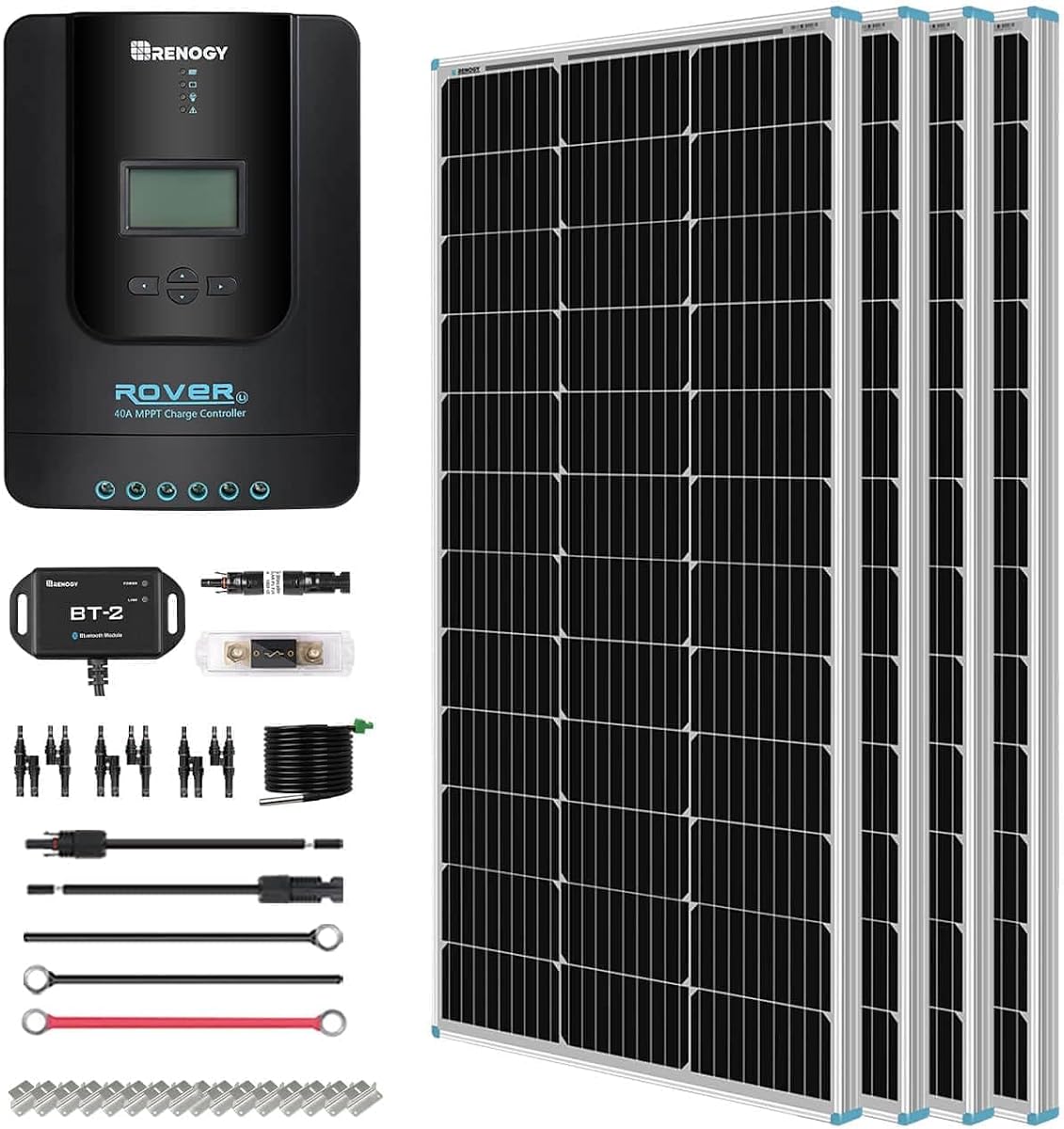
This kit simplifies installation by including a 40A MPPT charge controller along with the solar panels. Having everything in one box ensures compatibility and saves you from buying mismatched parts separately. Renogy is a trusted name in RV solar so quality control is generally very good.
We may earn a commission when you buy through this link, at no additional cost to you.
The MPPT controller optimizes power extraction from the panels significantly better than PWM alternatives. It supports up to 32V battery voltage which covers many lithium and lead-acid setups. This is a great choice for those who want a professional setup without doing complex wiring math.
The price is higher than buying panels alone but you save on the controller and cabling costs. Ensure your battery bank voltage matches the controller's requirements before purchasing. This system is robust and designed for long-term reliable daily use on the road.
First-time solar buyers will find this kit the easiest path to a working system. It eliminates guesswork regarding controller compatibility and sizing. We recommend this for those who want a hassle-free installation and reliable power management out of the box.
Includes MPPT charge controller to maximize energy harvesting efficiency automatically.
Designed to work seamlessly with standard RV battery configurations and wiring.
We may earn a commission when you buy through this link, at no additional cost to you.
This portable panel is designed for use with power stations rather than hard-wiring into your RV. It folds down easily for storage in small campers or storage bays. The 23% conversion rate is impressive for a portable unit ensuring fast charging during daylight hours.
We may earn a commission when you buy through this link, at no additional cost to you.
The auto-reboot feature helps it recover quickly if light conditions change or if it gets obstructed. The Oxford cloth lamination offers protection against rain and dust making it robust for camping trips. Connectors are intelligent to protect against over-current and short circuits.
It is not intended to be permanently bolted to a roof like the fixed panels. The construction is lighter which means it might not handle heavy snow loads on the roof. This is strictly for temporary setups where you can move it to find the best sun.
Campers who move frequently or use a portable power station will find this essential. It is perfect for boondocking where you need flexible power sources. We recommend this for those who want portable energy without drilling holes into their vehicle.
Compatible with popular power stations like Jackery and EcoFlow for easy setup.
Intelligent chips manage voltage and current to protect your connected devices safely.
We may earn a commission when you buy through this link, at no additional cost to you.
This 400W portable charger from Greenmagic offers high conversion efficiency for ground power. It features four built-in kickstands which make setting it up on flat ground very stable and fast. It works with a wide range of power stations including Jackery and EcoFlow easily.
We may earn a commission when you buy through this link, at no additional cost to you.
The surface has advanced lamination to protect cells from moisture and sun damage. It is rated IP65 for splashing though the junction box is not fully waterproof so avoid soaking. The rubber handle makes carrying it around the campsite easy even at 21 pounds.
The kickstands allow you to tilt the panel for optimal sun angle throughout the day. This gives better performance than laying flat on the ground. The hanging loops allow you to attach it to RV awnings for flexible placement options.
It is an excellent choice for those with large power banks needing rapid recharge speeds. The build quality is solid for outdoor use and storage. We recommend this for campers who need significant portable power without permanent RV roof installation.
High efficiency cells ensure your power bank reaches full capacity in shorter daylight hours.
Adjustable kickstands let you angle the panel for maximum sun exposure anywhere.
We may earn a commission when you buy through this link, at no additional cost to you.
This panel stands out for its IP67 rated waterproof protection which is higher than many rivals. The ETFE coating provides extra resistance against dust and harsh weather conditions. It folds down into a briefcase style making it easy to transport and store in tight spots.
We may earn a commission when you buy through this link, at no additional cost to you.
The adjustable kickstands offer three angles to optimize sun capture in different seasons. Reinforced grommets let you mount it securely on a tent or awning if needed. It supports multiple connection types so it fits almost any modern portable power station on the market.
At over 30 pounds it is on the heavier side for a portable unit. This might be a factor if you plan to move it constantly. However the durability and waterproofing make it a great long-term investment for rugged outdoor use.
It is suitable for serious outdoor enthusiasts who need reliable power in wet environments. The high efficiency ensures you get good energy even in less than perfect weather. We recommend this for those who prioritize durability and connectivity over ultra-lightweight design.
IP67 rating ensures the unit can handle heavy rain and dust exposure safely.
Multi-port cables allow connection to various power stations without extra adapters.
We may earn a commission when you buy through this link, at no additional cost to you.
This option provides four smaller 100W panels totaling 400W for flexible roof coverage. You can place them to avoid shading from vents or AC units more easily than a large single panel. The N-type cells offer 25% efficiency which is top tier for this price range.
We may earn a commission when you buy through this link, at no additional cost to you.
Each panel measures 31 by 22 inches and weighs about 11 pounds making them very light. The 16BB busbars improve light absorption and reduce hot spot risks on the roof. You get IP68 waterproof protection which is excellent for long-term reliability.
Managing four separate panels requires more wiring and mounting points than a single unit. You might need extra brackets or cable management to keep everything neat. But the flexibility in layout often outweighs the extra installation effort for complex roofs.
RV owners with irregular roof shapes will benefit greatly from this modular approach. It ensures no roof space is wasted and reduces shading losses. We recommend this for those who want a balanced mix of efficiency and layout flexibility.
Splitting into four panels allows better distribution around roof vents and obstacles.
IP68 waterproof rating and reinforced corners ensure long life in outdoor conditions.
We may earn a commission when you buy through this link, at no additional cost to you.
This panel offers a straightforward solution for upgrading RV power systems easily. The long built-in leads reduce the need for extra extension cables and connectors. It is designed to replace four smaller panels with one unit saving you wiring time.
We may earn a commission when you buy through this link, at no additional cost to you.
It features tempered glass and a sealed junction box for resistance against rain and splashes. The mounting holes align with common Z-brackets making installation simple for most users. It is a solid choice for those who need a direct replacement for an old setup.
The efficiency is not as high as the newer N-type models but it does the job well. It is important to use an MPPT controller to get the best performance from it. This unit is durable but does not have advanced shading tolerance features.
Owners looking for a no-frills upgrade that just works should consider this panel. It provides substantial wattage for the price and is easy to install. We recommend this for budget-conscious buyers who want reliable power for basic camping needs.
Long leads and pre-drilled holes reduce installation time significantly for DIY users.
Tempered glass and sealed box ensure the panel survives outdoor exposure effectively.
We may earn a commission when you buy through this link, at no additional cost to you.
Choosing the right solar panel involves understanding key technical specs and physical constraints. This guide breaks down what matters most for RV applications.
Efficiency tells you how much sunlight is converted into electricity. Higher efficiency means more power from the same roof space. Look for ratings above 23% for modern panels.
Prioritize high efficiency to maximize energy generation on limited RV roof areas.
Decide if you need permanent roof mounting or temporary ground use. Fixed panels are more durable while portable ones offer flexibility. Your camping style will dictate which type is better.
Choose fixed for daily use and portable for flexible off-grid power needs.
Look for IP65 or higher ratings on the junction box and connectors. Strong frames withstand wind loads and snow weight safely. Durability ensures years of reliable outdoor service without failure.
Verify waterproof ratings to ensure safety during rain and storms.
MC4 connectors are standard but check your controller matches. Some panels come with longer leads to reduce extra wiring. Proper connections prevent power loss and fire risks.
Ensure connector compatibility to avoid buying extra adapters or cables.
A longer warranty indicates manufacturer confidence in product quality. Look for 10 years on materials and 25 on output. Good support saves money if issues arise later.
Check warranty details before buying to protect your investment over time.
Calculate the total weight including brackets before mounting. Heavy panels might require reinforced roof structures. Lighter options are better for older RVs with thin roofs.
Stay within weight limits to avoid damage to your vehicle structure.
Set a realistic budget that includes panels and controllers. Cheaper panels might lack long-term durability. Balance upfront costs with future energy savings.
Invest in quality now to reduce replacement costs in the future.
Shadows from trees or vents can drop power output significantly. Look for panels with bypass diodes or twin cell tech. This keeps production steady even when partially shaded.
Choose panels with shading tolerance to maintain power during cloudy or shaded days.
Install your panels where they get the most direct sunlight throughout the day. Avoid shading from roof vents or AC units as much as possible. Use proper tilt mounts if your roof allows for angle adjustment.
Clean the glass surface gently with water and a soft cloth regularly. Dust and bird droppings can reduce efficiency significantly over time. Inspect junction boxes and cables periodically for signs of wear or damage.
Store portable panels in a dry and shaded area when not in use. Folding them correctly prevents internal stress on the cells. For fixed panels check connections seasonally to ensure safety and performance.
Yes you can use a 400 watt panel on a 12V system but you need an MPPT controller. A PWM controller will waste much of the power available. Always match the controller type to your panel specs for safety.
No mounting on the roof is not required but it is common for fixed power. You can also use ground mounts or awning setups for portable panels. Choose what fits your travel habits best.
Most high-quality panels last over 25 years with minimal performance loss. Quality construction like tempered glass helps them survive weather. Proper maintenance ensures they reach their full lifespan easily.
Bifacial panels can add up to 30% more power if installed correctly. They work best on reflective surfaces like white RV roofs. The extra cost is worth it if space is limited.
Yes you can wire panels in parallel or series depending on your system. Parallel is safer for 12V systems to keep voltage low. Series is better for long cable runs to reduce losses.
For a 400 watt panel a 40A MPPT controller is usually ideal. Ensure the controller supports your battery voltage. A larger controller allows for future expansion of your system.
We have reviewed the top ten models that offer distinct advantages for every user. Whether you need portable flexibility or fixed roof power there is a match here. Our top pick stands out for its high efficiency and shading tolerance.
Prioritize build quality and efficiency when comparing different brands. A slightly higher initial cost often pays off in longevity and performance. Consider your roof space and power needs before making a final decision.
Always check current pricing and availability as these items change frequently. Reading recent user reviews can also provide insight into real-world performance. Stay powered up with the right choice for your next adventure.