
SIRUI Night Walker 35mm S35 Manual Focus Cine Lens
4.4Editor score
T1.2 large aperture
S35 coverage
Lightweight design
This guide compares the top ten Cine Lens options for filmmakers focusing on aperture, build quality, and optical performance to help you choose the right tool
Choosing the right Cine Lens is crucial for achieving professional cinematic results in your video productions. These specialized lenses offer consistent focus breathing, uniform gear positions, and precise T-stop markings that standard stills lenses lack. Whether you are shooting narratives, documentaries, or commercial content, the right glass can transform your visual storytelling significantly.
We have carefully evaluated ten distinct Cine Lens models based on optical performance, build quality, and versatility across different camera systems. Our analysis considers factors like aperture range, focal length utility, and mount compatibility to ensure you find a lens that meets your specific creative and technical requirements without compromise.
Each pick in this list showcases unique strengths tailored to different budgets and production needs. While we focus on performance and reliability, please note that product availability and pricing can change frequently. Always verify current stock and deals before making your final investment decision for your camera kit.
4.4Editor score
5.0Editor score

5.0Editor score
The following table provides a side-by-side comparison of all ten Cine Lens models reviewed in this guide. Use this to quickly identify key specifications like mount type, aperture, and focal length to find the best match for your camera setup.




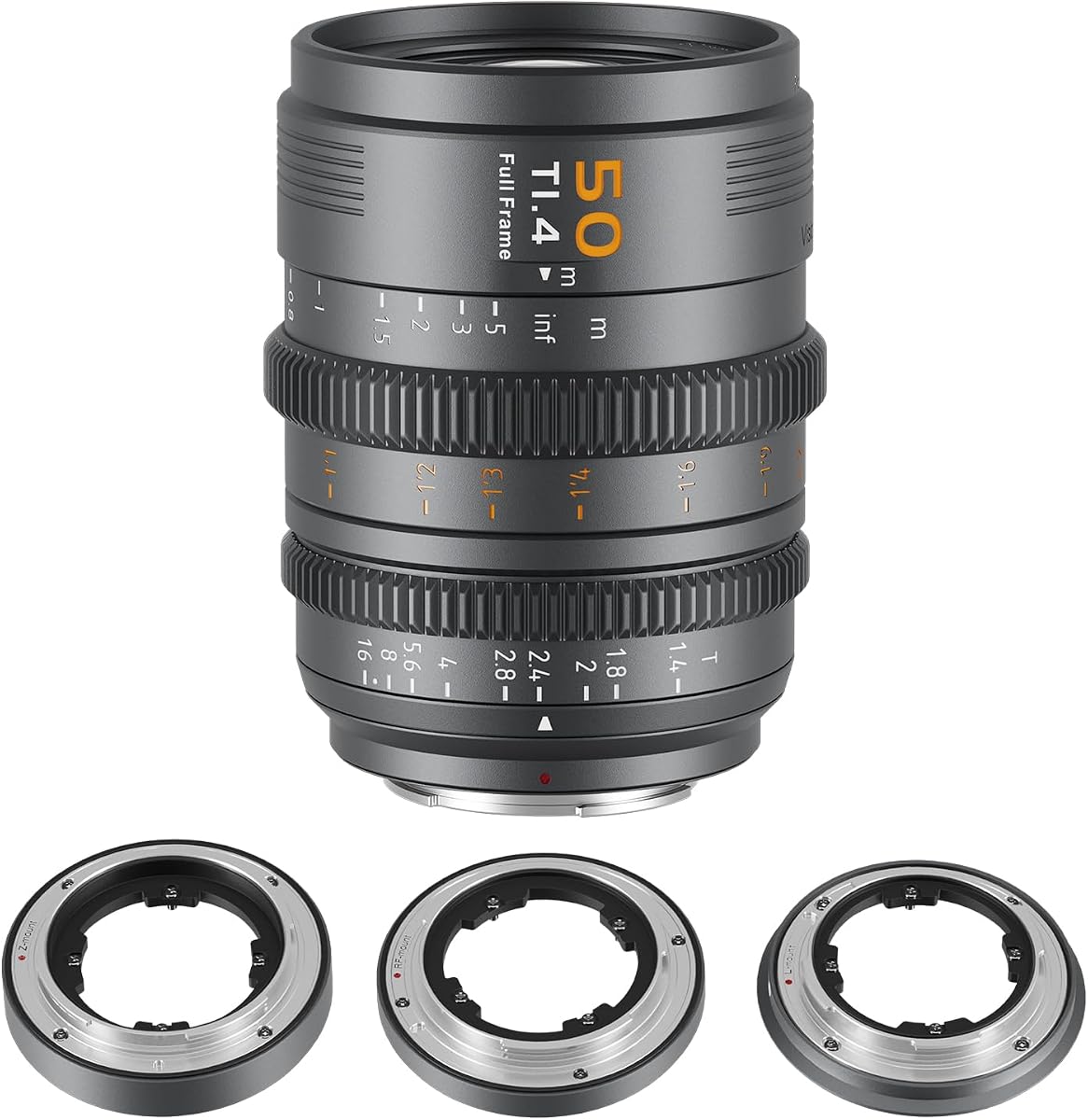
The SIRUI VP-1 Vision Prime 1 50mm T1.4 stands out as a top-tier choice for modern filmmakers seeking high-resolution capabilities. With a perfect five-star rating, this lens delivers edge-to-edge sharpness and minimizes aberrations effectively. Its interchangeable mount system allows seamless switching between Sony, Canon, Nikon, and Panasonic cameras.
We may earn a commission when you buy through this link, at no additional cost to you.
Designed for 8K storytelling, this lens integrates aspherical elements and advanced ED glass to ensure clarity. The T1.4 aperture enables low-light shooting without raising ISO excessively. You get nuanced image details and a dreamy separation between subject and background. The build quality uses durable aluminum alloy, keeping weight around 600g.
While it is a prime lens without zoom functionality, the optical performance makes up for it. Focus breathing is minimized, aiding in smooth transitions. The uniform design across the set ensures color consistency if you buy multiple focal lengths. Some users may miss autofocus, but cine workflows often prefer manual precision.
This lens is ideal for travel, documentary recording, and gimbal work due to its compact size. If you prioritize optical quality and mount flexibility in a full-frame format, this is a strong recommendation. It balances professional features with a manageable form factor for solo shooters or small crews.
The pre-installed E mount with user-interchangeable RF/Z/L mounts lets you adapt to different camera systems quickly. This flexibility ensures your lens investment remains valid as you upgrade your camera body.
Advanced glass elements deliver edge-to-edge sharpness while reducing chromatic aberrations. This ensures your footage looks crisp even on the highest resolution sensors available today.
We may earn a commission when you buy through this link, at no additional cost to you.
The SIRUI Night Walker 35mm T1.2 offers incredible value for filmmakers working with APS-C or S35 sensors. Its large aperture allows pure low-noise night scenes without excessive ISO. This makes it perfect for humanity documentaries or portrait filming where light control is essential. The aesthetic metal gray or classic black options look premium.
We may earn a commission when you buy through this link, at no additional cost to you.
Optical performance is outstanding, achieving perfect sharpness even at max aperture. Focus breathing is minimal, which is critical for smooth video pulls. The aluminum cine housing protects internal elements while keeping weight near 500g. You get a 270-degree focus rotation for precise manual control during takes.
As an APS-C lens, it does not cover full-frame sensors. However, for cameras like the FX30 or A6500, it is ideal. The build feels sturdy but portable. Some users might want more focal length options, but the 35mm equivalent provides a natural perspective for many scenarios.
Choose this lens if you need a lightweight, fast prime for budget-conscious productions. It excels in expressiveness and storytelling without breaking the bank. The T1.2 aperture gives you creative freedom in challenging lighting conditions effortlessly.
The T1.2 aperture captures more light, allowing for clean footage in dark environments. You can maintain low ISO to reduce noise while keeping subject clarity high.
Weighing only 500g with a durable aluminum body, this lens is easy to handle. It is perfect for handheld or gimbal stabilization tasks without added bulk.
We may earn a commission when you buy through this link, at no additional cost to you.
The DZOFILM Pictor 50-125mm T2.8 represents a high-end option for professional productions needing zoom versatility. It maintains focus across the entire zoom range, a feature known as parfocal. This eliminates the need to refocus when changing focal lengths, saving time during critical shots. The 5.0 rating reflects its exceptional reliability.
We may earn a commission when you buy through this link, at no additional cost to you.
Its T2.8 aperture remains constant from 50mm to 125mm, ensuring consistent exposure. The 16-slat iris creates beautiful circular bokeh in highlights. Designed for Super35 sensors, it pairs well with cinema cameras. Compatible with standard Cine lens accessories, it fits into existing professional workflows seamlessly.
While the price point is higher than primes, the flexibility of a parfocal zoom justifies the cost. It is heavier, but the optical quality is superb. Focus breathing is minimized to allow smooth transitions. This lens is not for casual users but for serious filmmaking teams.
If you need a versatile zoom that performs like a prime, this is the choice. It prioritizes optical precision and operational efficiency on set. Invest in this if you demand professional standards in your production values.
This lens maintains focus throughout the zoom range, which is rare outside high-end optics. You can zoom in during a shot without losing sharpness.
The 16-slat iris creates smooth, circular bokeh even at wider apertures. This adds a polished, cinematic look to your subject highlights.
We may earn a commission when you buy through this link, at no additional cost to you.
The Rokinon Cine DS 85mm T1.5 is designed for portrait work and tight framing with beautiful background blur. It features a color-matched DS line that ensures consistency when used with other Rokinon lenses. The 8 blade iris creates attractive bokeh. Its aperture range from T1.5 to T22 gives you plenty of control.
We may earn a commission when you buy through this link, at no additional cost to you.
With full-frame coverage, it utilizes the entire sensor area. The angle of view is 28.3 degrees on full frame, perfect for isolating subjects. The unified gear positions make rigging easier on a rig. Focus distance is 3.6 ft, meaning it is not ideal for close-ups.
This lens is a solid choice for interview setups or storytelling shots where separation is key. It lacks autofocus, but cine lenses typically rely on manual control. The build quality feels robust. If you need a short telephoto for drama, this delivers.
Ideal for users prioritizing aesthetic background separation in interviews or dramas. The T1.5 aperture allows good low-light performance. Check compatibility with your Canon EF system to ensure optimal mounting and operation.
All Rokinon Cine DS lenses share the same gear positions. This simplifies lens changes on a rig without adjusting follow focus setups.
The DS line is color matched to other lenses in the series. This helps maintain visual continuity across different focal lengths in a shoot.
We may earn a commission when you buy through this link, at no additional cost to you.
This kit includes four essential focal lengths: 24mm, 35mm, 50mm, and 85mm. It offers comprehensive coverage for most narrative scenes. All lenses feature T1.5 apertures and de-clicked rings for smooth exposure changes. The dual side focus and T-stop scales help in tight spaces where sides are blocked.
We may earn a commission when you buy through this link, at no additional cost to you.
Multi-layer coating reduces flare and maintains color fidelity. Each lens covers full-frame sensors. The aperture ring allows manual control without clicks, which is vital for video. This set is a great entry point for teams wanting consistent lenses without mixing brands.
While individual lenses are heavy, having them matched saves time. The kit is perfect for short films or indie productions needing variety. The 4.9 rating shows high customer satisfaction. Just be aware of the total weight when mounting on a gimbal.
If you need a ready-to-go kit without building a set individually, this is efficient. Ensure you have a robust support system for the weight. It is a reliable solution for consistent visual storytelling.
Both sides of the barrel have focus marks. This is useful when the lens is mounted on a rig where one side might be inaccessible.
The aperture ring moves smoothly without clicks. This allows for smooth exposure adjustments during filming rather than distinct stops.
We may earn a commission when you buy through this link, at no additional cost to you.
The Rokinon 35mm T1.5 offers a versatile wide-angle perspective for interiors and street scenes. It matches the color and gear positions of the DS series for consistency. Its angle of view on full frame is 63.1 degrees. The minimum focusing distance is 12 inches, allowing closer shots than other primes.
We may earn a commission when you buy through this link, at no additional cost to you.
Filter size is 77mm, which is larger than standard but manageable. The T1.5 aperture ensures decent low-light performance. Full frame coverage ensures no crop factor issues. This lens is ideal for documentary work where context is key.
It lacks autofocus, but manual control allows precise framing. The build quality is consistent with other Rokinon Cine lenses. If you need a wide prime for Canon EF, this is a strong contender. The 4.6 rating indicates solid reliability.
Best for shooters needing a balance between width and speed. The close focus adds creative flexibility. Verify your filter budget before purchase as 77mm options vary.
35mm is a classic focal length for documentaries and narrative contexts. It provides a natural perspective that feels authentic to the viewer.
With a 12-inch minimum focus, you can frame subjects tighter than expected. This adds creative options for intimate details.
We may earn a commission when you buy through this link, at no additional cost to you.
This 24mm lens is tailored for RF mount cameras like the R7 and Komodo. It provides a wide S35 perspective for landscapes and interiors. The T1.2 aperture is great for low-light work. You can focus as close as 0.3m, which is ideal for detail shots. This flexibility supports immersive storytelling.
We may earn a commission when you buy through this link, at no additional cost to you.
The 270-degree focus rotation enables smooth manual pulls. Advanced optics ensure high sharpness with controlled aberration. The lens is lightweight for gimbal work. While limited to S35, it works well with cameras like the R50 or C70.
It offers great value for RF users needing a fast wide prime. The design is premium and portable. Focus breathing is minimal. If you are building an RF cinema kit, this fits well without adding bulk.
Choose for environmental storytelling and wide shots. The close focus capability adds creative depth. Ensure your camera is RF compatible to take full advantage of the design.
Designed for RED Komodo and EOS R series cameras. It supports modern mirrorless bodies with cinema-grade optics.
The 0.3m minimum focus allows intimate detail shots without switching lenses. This is perfect for macro-style storytelling.
We may earn a commission when you buy through this link, at no additional cost to you.
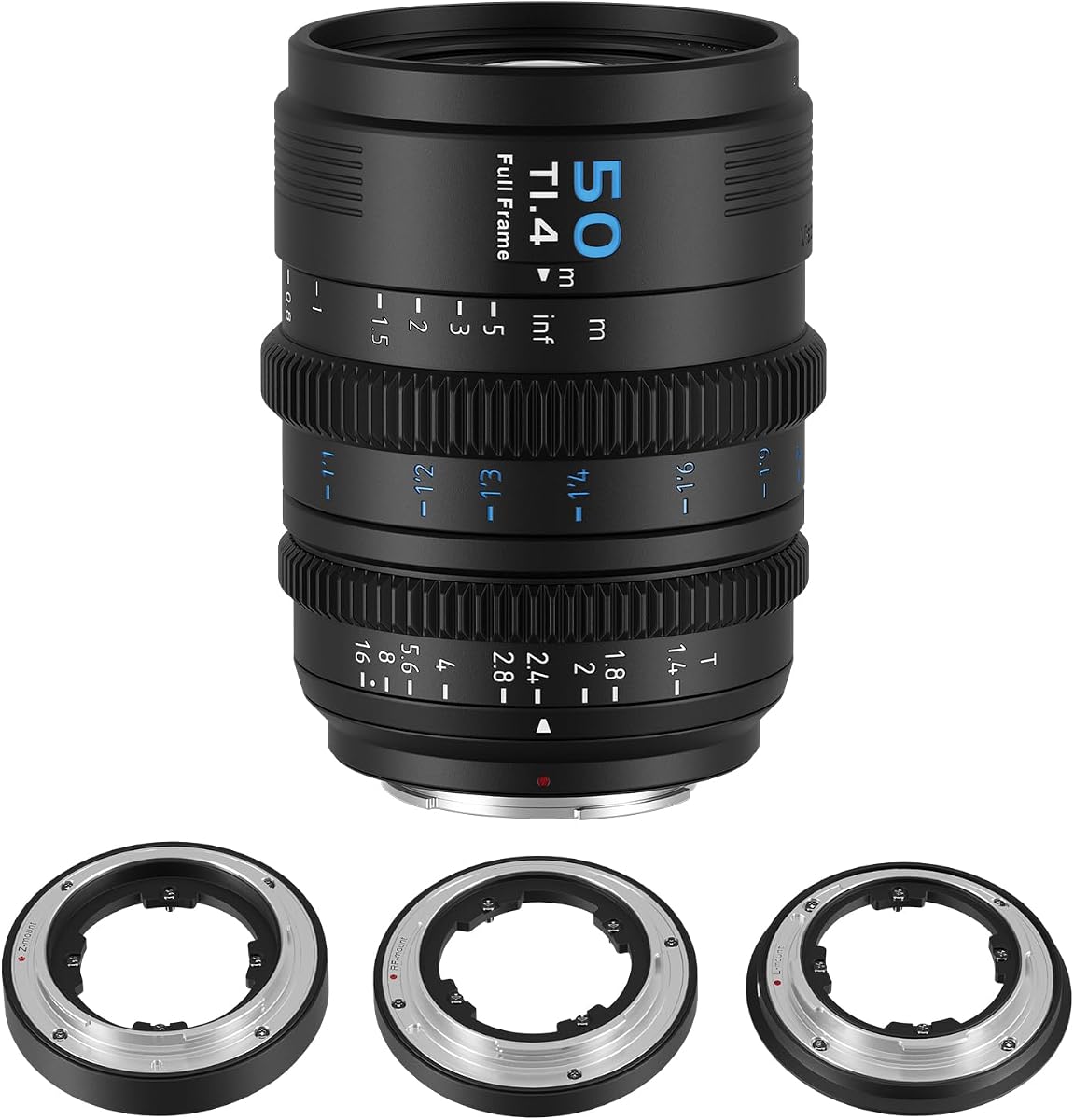
This lens is a repeat of the first model with a specific variant. It offers the same multi-mount versatility for different camera systems. Users appreciate the consistent gear positions and color matching. The 600g weight keeps it portable for travel. The 4.0 rating suggests some users find it good but not perfect.
We may earn a commission when you buy through this link, at no additional cost to you.
Optical design minimizes chromatic aberrations. The T1.4 aperture creates dreamy bokeh. It is built for aluminum alloy which is durable. If you shoot on multiple systems, swapping mounts is convenient. Just ensure you buy the right mount kit initially.
It is a solid choice for hybrid shooters. The compact size helps with handheld work. While the rating is lower, the utility of mount switching adds value. Always check mount compatibility before buying.
Best for those needing one lens to work across brands. The focus control is manual. Prioritize optical performance and convenience for this model.
Supports E, RF, Z, and L mounts interchangeably. This ensures you can adapt the lens as your camera gear evolves.
It provides full-frame coverage in a lightweight body. This balance makes it easy to handle in field conditions.
We may earn a commission when you buy through this link, at no additional cost to you.
For M4/3 users, this lens is a perfect match. It offers the same optical performance as the RF version. The T1.2 aperture helps in low light without ISO noise. It weighs only 500g, keeping setups light. The 4.9 rating shows high satisfaction among Micro Four Thirds users.
We may earn a commission when you buy through this link, at no additional cost to you.
The 24mm focal length equivalent to 34mm full frame is versatile for streets. Optical elements are designed to minimize aberrations. You get a 270-degree focus ring for precise control. This is a premium choice for small sensor cameras.
It is ideal for travel and run-and-gun shooting. The build feels sturdy. Focus breathing is low. If you use GH6 or BMPCC4K, this lens is a great addition to your kit without overloading your gimbal.
Choose for small format systems needing speed. The 12 aperture blades create nice bokeh. Ensure you have M4/3 threads for filters before purchase.
Specifically designed for M4/3 cameras like Panasonic and Olympus. It leverages the sensor size for optimal performance.
With a 4.9 rating, users love its build and optics. It is a reliable choice for serious filmmakers.
We may earn a commission when you buy through this link, at no additional cost to you.
The Rokinon DSX85 offers 9 elements in 7 groups for clear optics. It is a great portrait lens with beautiful bokeh. The T1.5 aperture helps in low light. It features ultra multi-coated glass to reduce flare. This model maintains compatibility with Canon EF mounts efficiently.
We may earn a commission when you buy through this link, at no additional cost to you.
The angle of view on full frame is 28.4 degrees. This isolates subjects well. The 9 aperture blades ensure smooth background shapes. It is a robust addition for Canon users. The 4.7 rating is high among users looking for value.
As a prime lens, it is limited in range. But for specific shots, it excels. The build is sturdy enough for daily use. Ensure you have filters for the 72mm size. It is a strong alternative to more expensive telephotos.
Ideal for close-up storytelling and portraits. Focus manually for precise framing. If you need a dedicated portrait tool without high cost, this fits the bill.
Ultra multi-coating reduces flare for better color accuracy. This ensures clean footage even with strong lighting.
More blades create smoother bokeh circles. This helps in creating a professional background blur effect.
We may earn a commission when you buy through this link, at no additional cost to you.
Selecting the right Cine Lens requires understanding several critical factors that impact your footage quality and workflow.
Ensure your lens mount matches your camera body or has an adapter. Mismatched mounts can restrict your field of view or require heavy adapters. Check if the lens supports your sensor size such as Full Frame or S35.
Always verify the mount type before purchase to avoid extra costs or limitations.
Aperture affects low-light performance and depth of field. Cine lenses often use T-stops for precise exposure control. A wider aperture like T1.2 or T1.4 allows better performance in dark conditions.
Look for lenses with smooth iris adjustments for video work.
Manual focus is standard in cine lenses. Look for a long focus throw and minimal breathing. Focus breathing occurs when the image magnifies during focus adjustments, which can be distracting.
Check product specs for focus distance and breathing details.
Cine lenses are built for heavy use. Materials like aluminum alloy ensure durability. The weight affects handheld work and gimbal usage. Heavier lenses offer stability but require robust support.
Choose based on your mobility needs and production environment.
Consider the primary subjects you shoot. Wide angles work for landscapes while telephoto suit portraits. Kits offer multiple lengths but may be heavier. Primes offer better optics for specific needs.
Select focal lengths that match your typical scenes.
Kits provide immediate versatility at a lower combined cost. Individual primes might offer higher optical performance. Evaluate your workflow to decide which approach saves time and money.
Kits are often better for beginners building a set.
Lens diameter dictates filter size. Larger threads mean more expensive filters but easier cleaning. Check compatibility with matte boxes and rig systems.
Ensure you have the necessary accessories before buying.
Lightweight lenses reduce fatigue on long shoots. Heavy lenses can strain gimbals. For travel or documentaries, low weight is a major priority.
Balance optical quality with physical load when selecting.
Always mount your lens securely to the camera body. Use a tripod or gimbal for stability. Focus manually by turning the ring smoothly. Use the focus scales if available for repeatability.
Clean the glass with a microfiber cloth to remove dust. Avoid touching the optical elements directly. Store lenses in a dry case when not in use. Humidity can damage internal components over time.
Check for dust and smudges before every shoot. Use a blower brush to clear the lens mount contacts. Handle the gear rings with care to prevent stripping. Proper maintenance ensures longevity and consistent performance.
A Cine Lens is designed for video production rather than photography. It features manual controls, T-stop markings, and durable mechanical gear rings for smooth operation.
Yes, but they are heavy and manual. You lose autofocus and electronic aperture control. They are best suited for cameras with manual focus aids.
T-stop measures actual light transmission which is more accurate for video. F-stop is a theoretical value. Cine lenses use T-stops to ensure consistent exposure across different lenses.
Manual focus gives the operator precise control over framing. Autofocus is often inconsistent in video. Cine lenses prioritize smooth and repeatable focus pulls.
They are worth it for professional video work. They reduce issues like breathing and flare. For hobbyists, standard lenses may be sufficient.
Use a blower to remove dust first. Then gently wipe the glass with a microfiber cloth. Avoid using harsh chemicals on the lens coatings.
Choosing a Cine Lens is a significant decision for any filmmaker. The options above range from affordable primes to premium zoom kits. Your choice should align with your camera system and production needs.
Prioritize optical quality and mount compatibility for longevity. A lens that grows with your camera body saves money in the long run. Also consider weight if you shoot handheld or on gimbals often.
Prices and availability change frequently. Always check current offers before finalizing your purchase. Investing in the right glass elevates your creative output immediately.